
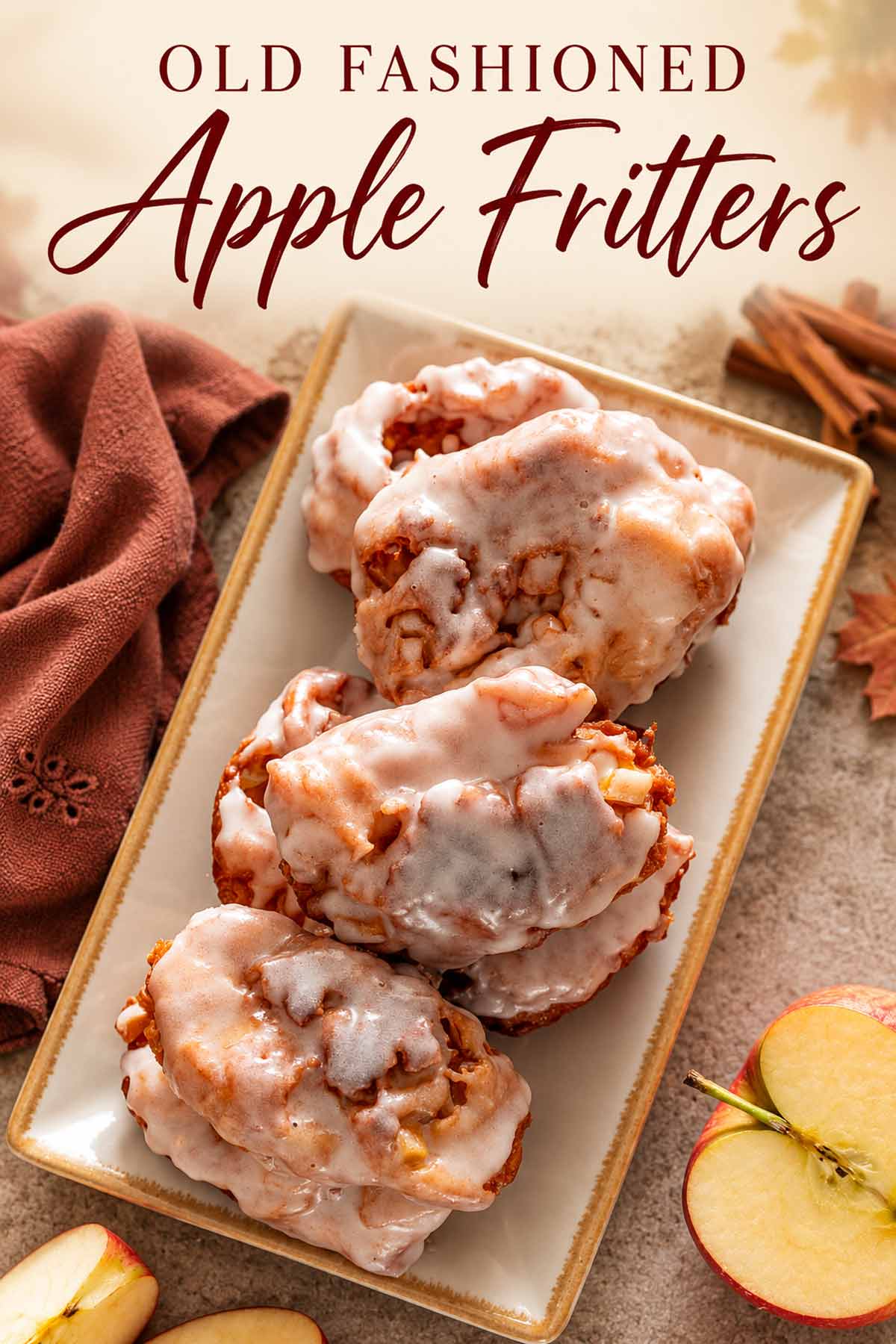
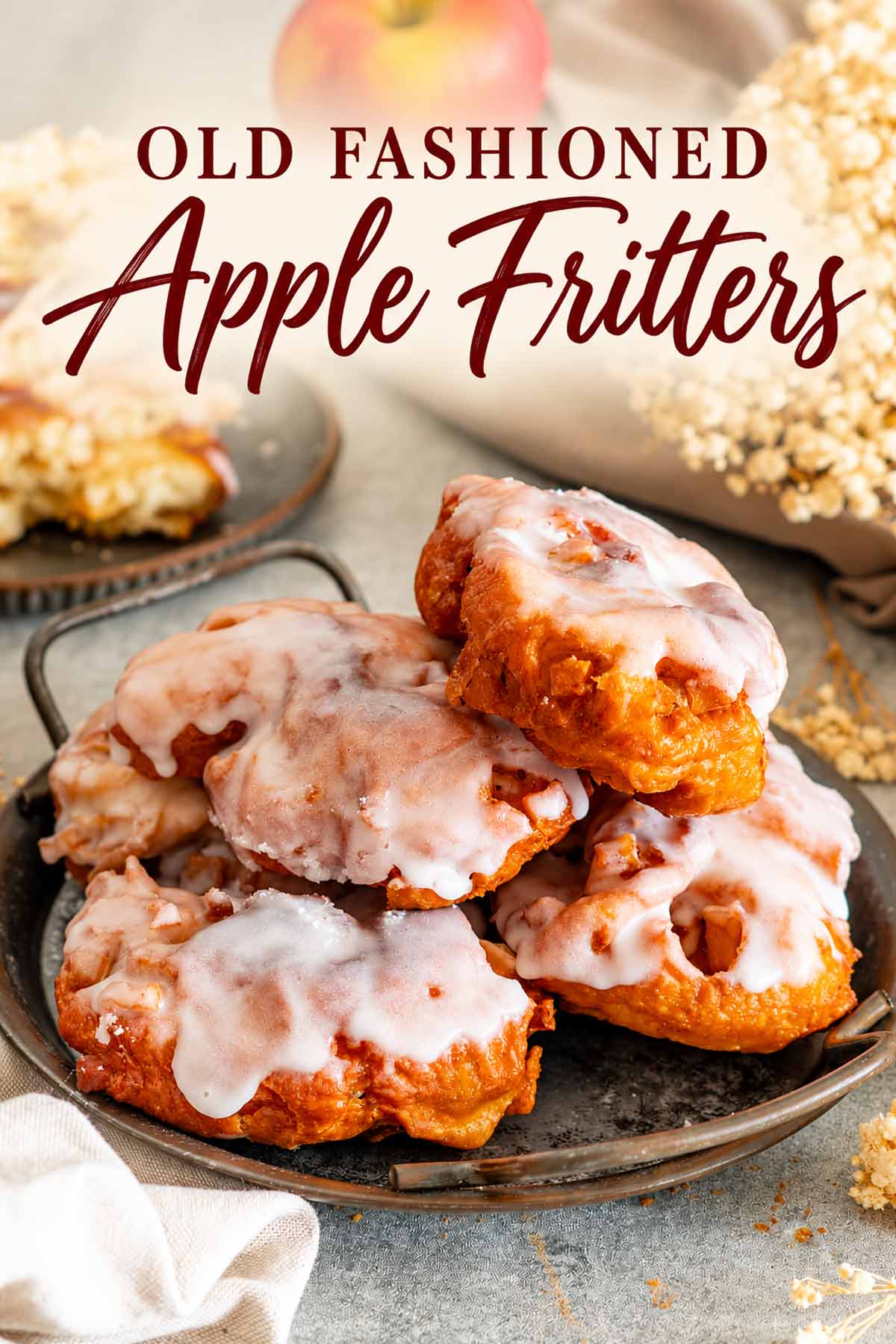
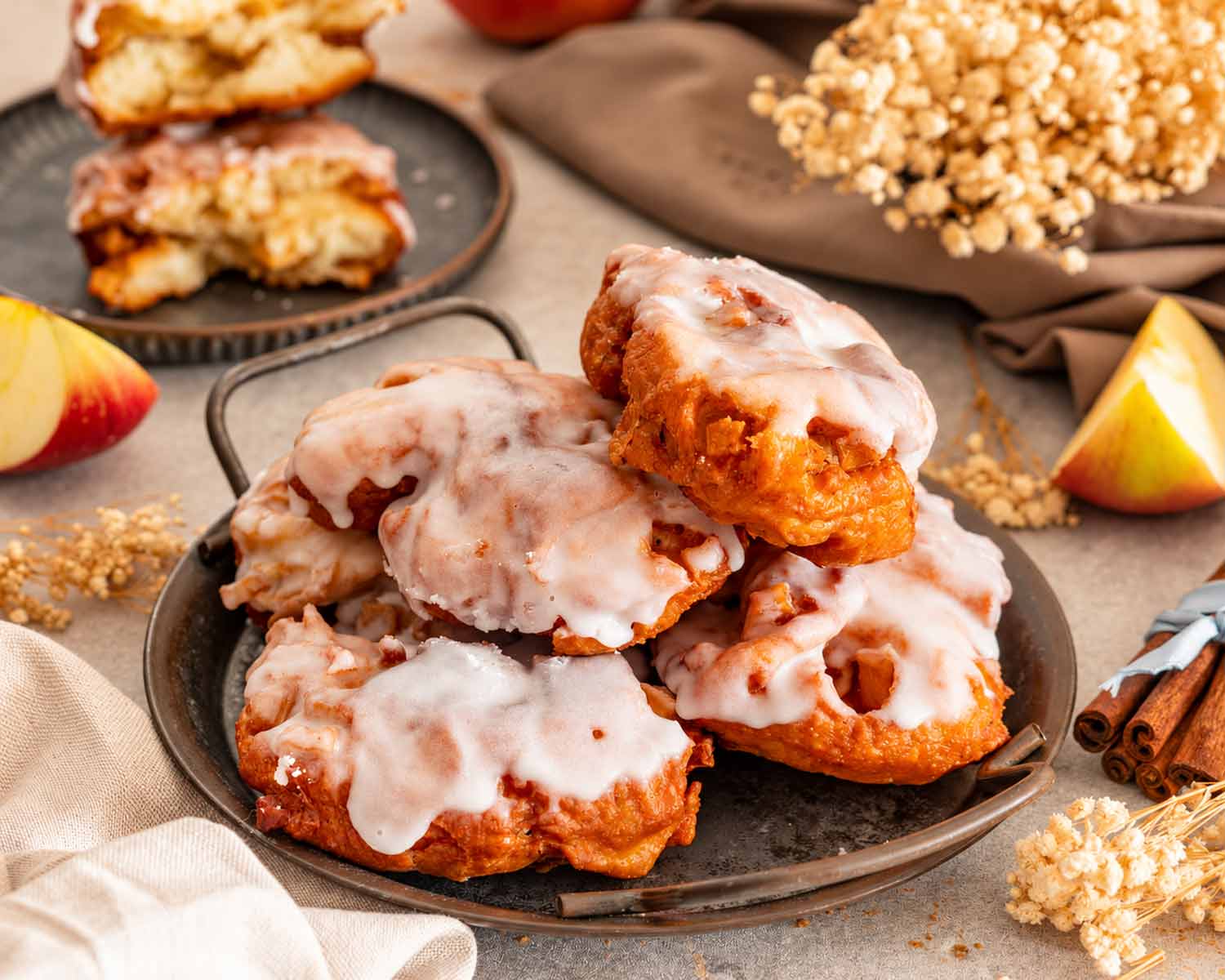
Old Fashioned Apple Fritters are yeasted dough folded around cinnamon apples, fried until the edges go craggy and deep golden, then dipped in vanilla glaze. They’re the bakery kind, the big messy ones with torn edges and apple showing through. Makes 10, and they’re best the day you make them.
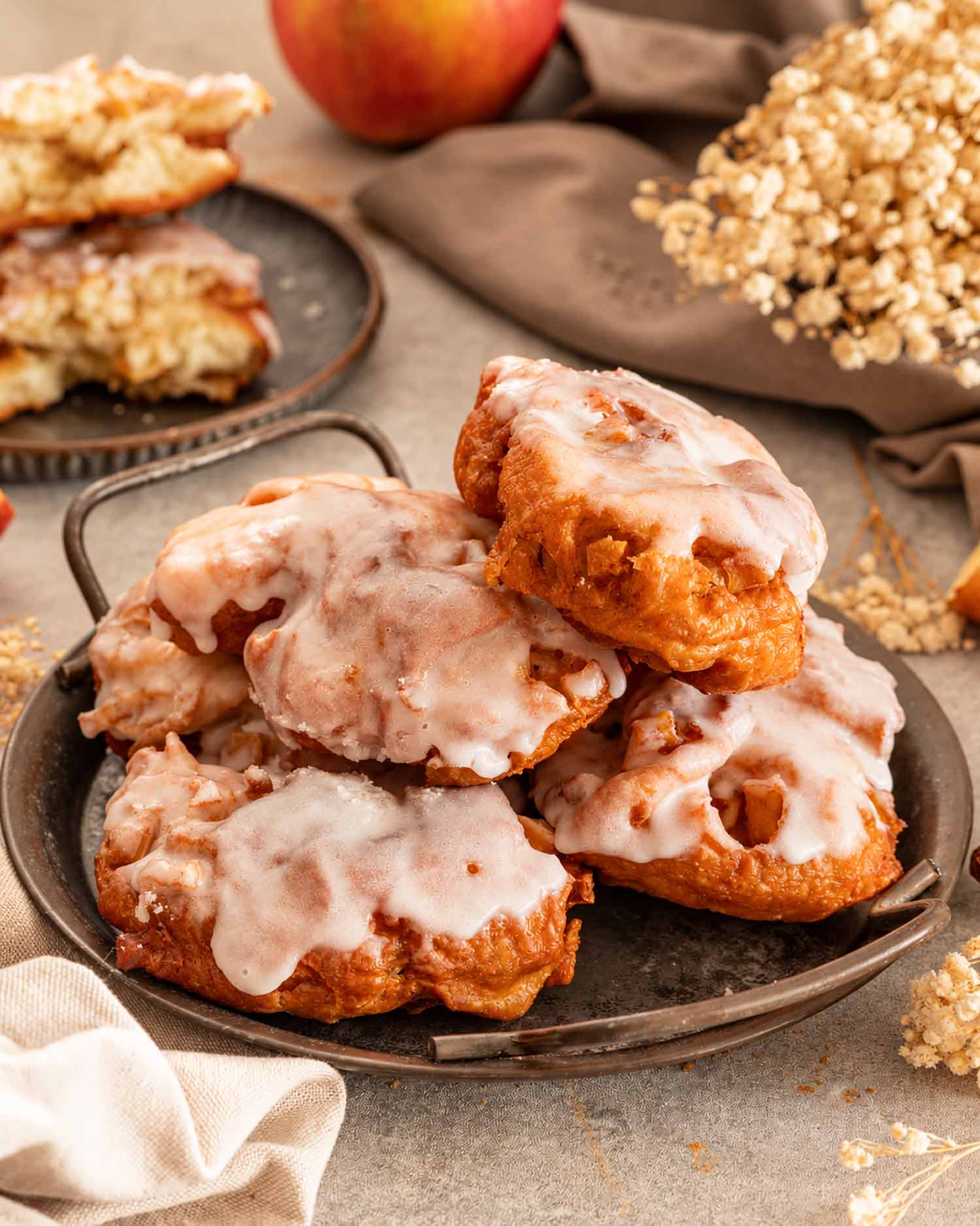
The Smell Alone Is Worth the Afternoon
Every fall I get the urge to fry something, and this is usually where it lands.
Apple fritters are a project. There’s no pretending otherwise. You cook apples, you make a dough, you let it rise, you fold it, you let it rise again, and then you stand over a pot of hot oil for half an hour. Two and a half hours, start to glaze.
But the smell that comes out of this is unlike anything else I make all year. Cinnamon and yeast and hot sugar, and by the time the first batch comes out of the oil the whole house has gone quiet and hopeful.
I used to fry donuts when I was 14 years old. My first job in Canada was at a bakery in Windsor, standing over a fryer on weekend mornings before I was old enough to know what a career was. Some things stay in your hands.
Fair warning about the apples. They need to cool all the way down before they go anywhere near the dough. Warm apples turn soft dough into soup and you will not get it back.
Ten fritters, a floured counter, and an afternoon.
The Secret Is the Folding
Most apple fritter recipes tell you to stir the apples into the dough. That gets you a sweet bread roll with fruit in it. Fine, but not what you want.
Here you roll the dough out flat, scatter the cooled apples over it, and then fold it like a letter. Roll it out again. Fold again. Twice is enough.
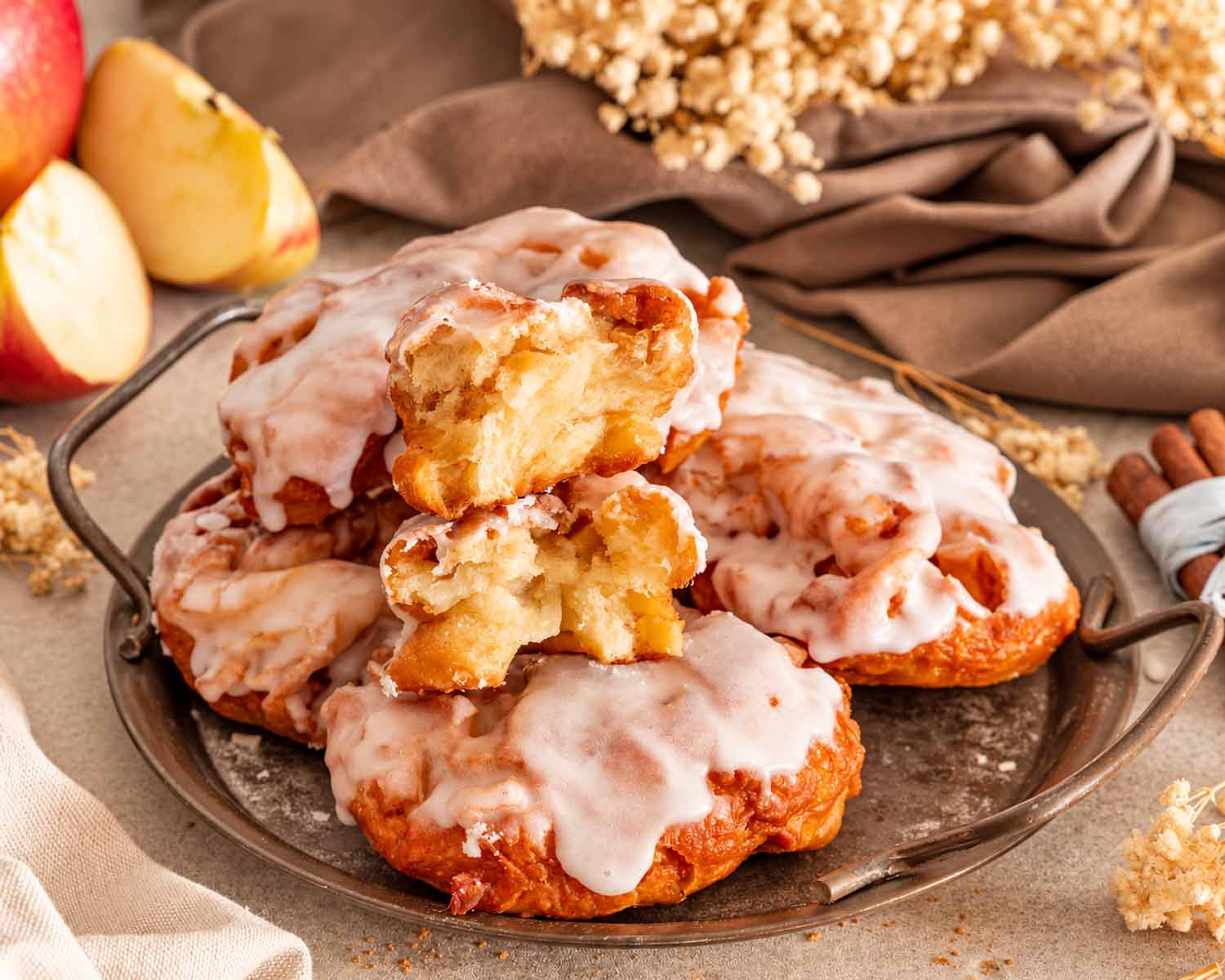
That folding is what builds the layers. Every fold traps apples between sheets of dough, and when the fritter hits the oil those layers push apart and the edges tear open. That’s where the craggy bits come from, and the crunchy corners, and the pockets where you bite in and get pure apple.
The dough will look rough and uneven and a bit of a mess. Good. Smooth dough makes smooth fritters, and smooth fritters are just donuts.
One more thing. When you cut the fritters, don’t tidy them up. Ragged edges fry crispier than clean ones, and that contrast between the shatter at the edge and the soft middle is the whole reason to make these.
Ingredients in Old Fashioned Apple Fritters
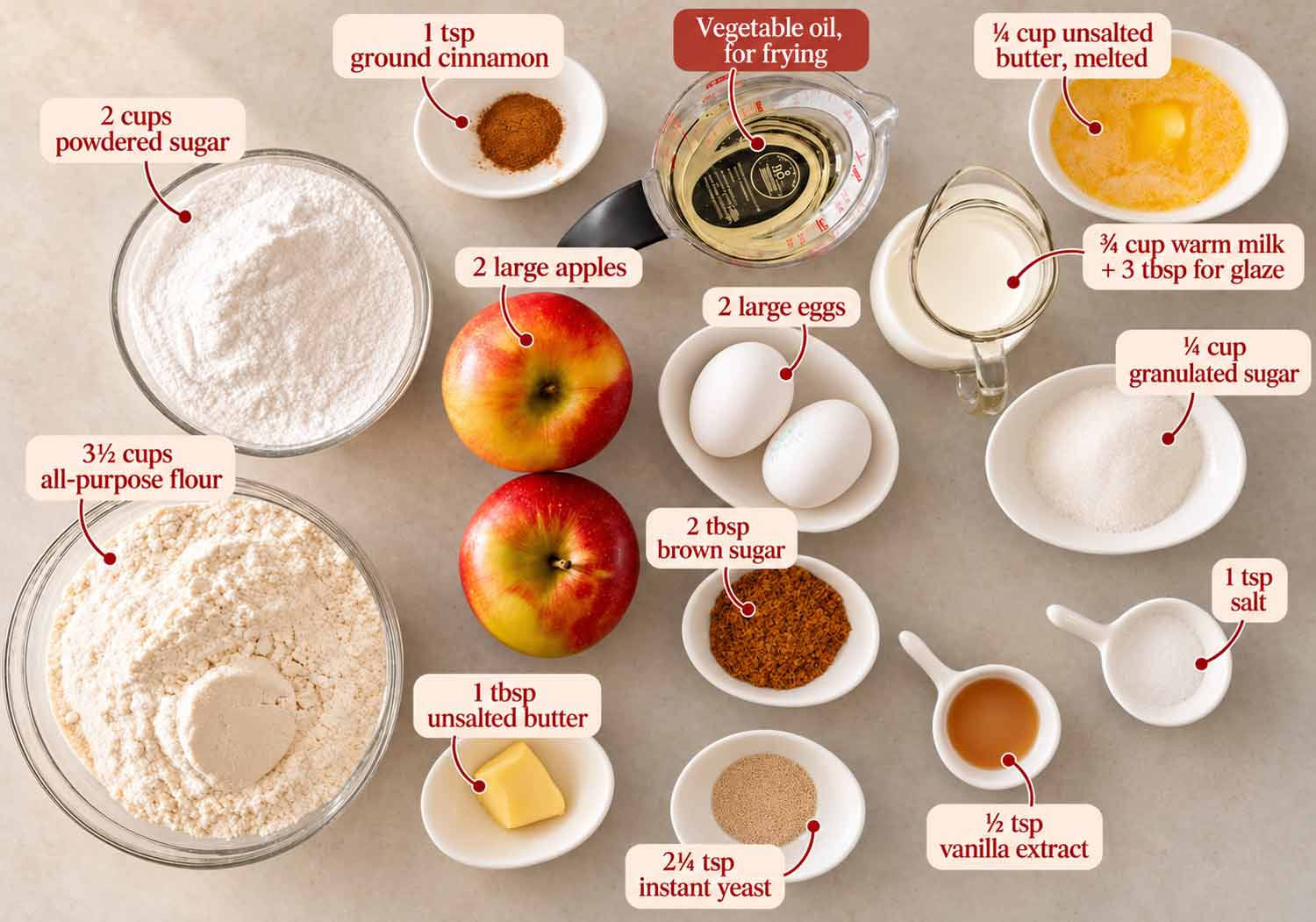
- Apples (2 large, peeled and diced small): Something firm and tart. Granny Smith, Honeycrisp, Braeburn. A soft apple turns to applesauce in the pan and you lose the texture entirely. Dice them small so they fold in without tearing the dough.
- Unsalted butter (1 tablespoon for the apples, ¼ cup melted for the dough): The tablespoon cooks the apples down. The quarter cup goes into the dough and keeps it tender.
- Brown sugar (2 tablespoons): For the apples. It melts into a syrup around them while they cook.
- Ground cinnamon (1 teaspoon for the apples, 1 teaspoon for the dough): In both places. Cinnamon in just the filling isn’t enough, you want it through the whole thing.
- All purpose flour (3½ cups): Standard flour, nothing special needed. Keep a little extra on hand for the counter.
- Granulated sugar (¼ cup): In the dough. Just enough to feed the yeast and take the edge off, since the glaze brings most of the sweetness.
- Instant yeast (2¼ teaspoons): That’s one standard packet. Instant goes straight in with the dry ingredients, no proofing step.
- Salt (1 teaspoon): Don’t skip it. Sweet dough without salt tastes flat and you can’t fix it later.
- Warm milk (¾ cup): Warm, not hot. If it’s too hot for your wrist it’s too hot for the yeast.
- Eggs (2 large): Richness and structure. Room temperature if you remember, straight from the fridge if you don’t.
- Vegetable oil (for frying): You’ll need about 2 inches in the pot. Canola or peanut oil work too. Use something neutral with a high smoke point.
- Powdered sugar (2 cups): The glaze. Sift it if it’s lumpy, because lumps don’t whisk out.
- Milk (3 tablespoons for the glaze): Add it slowly. You can always thin a glaze, thickening one means more powdered sugar and a bigger batch than you wanted.
- Vanilla extract (½ teaspoon): In the glaze. Small amount, big difference.
How to Make Old Fashioned Apple Fritters
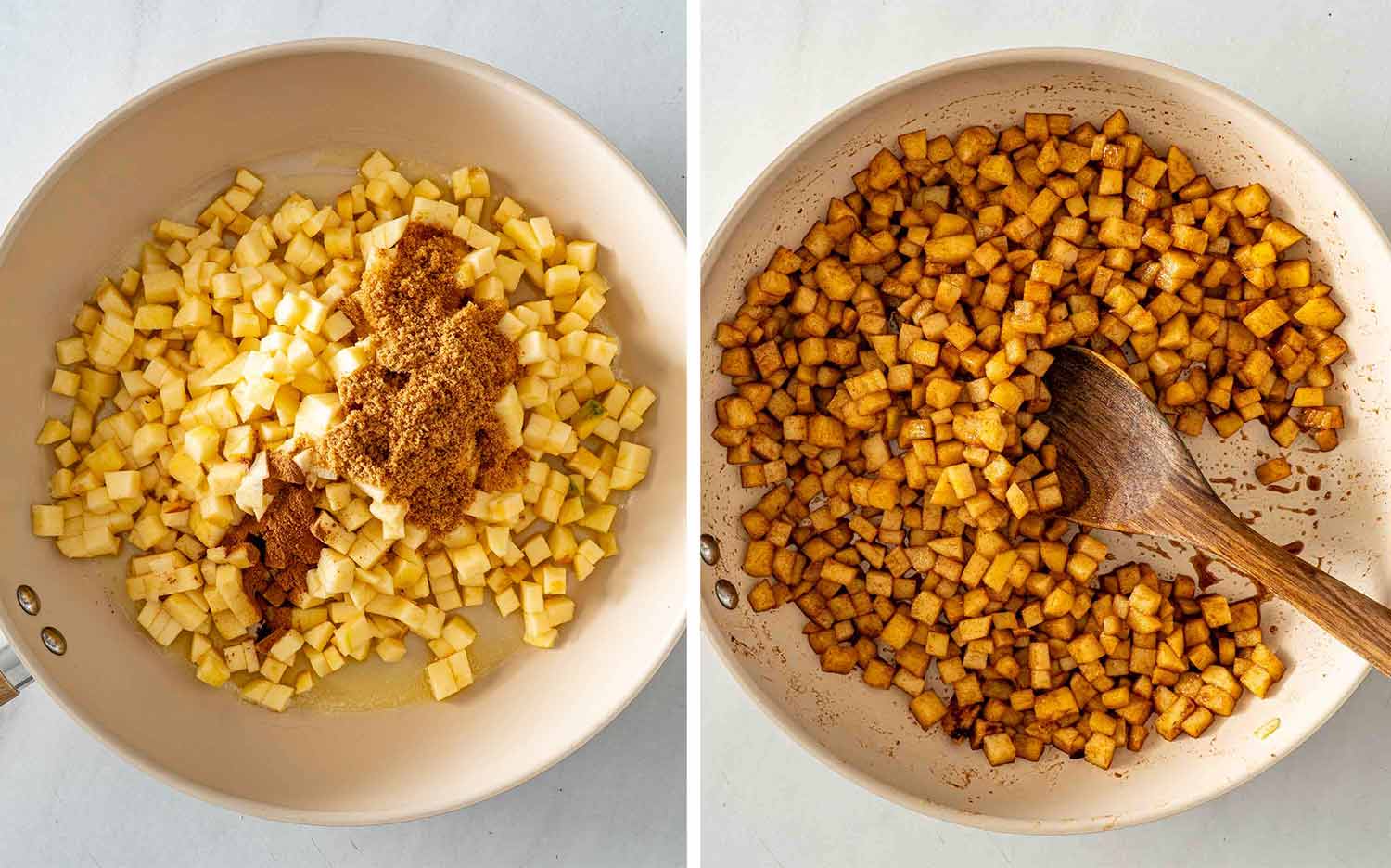
Cook the apples: Melt the butter in a skillet over medium heat, then add the diced apples, brown sugar, and cinnamon. Cook 4 to 5 minutes until they’re softened and syrupy. Spread them out on a plate and let them cool all the way down. This is the step people rush and it’s the step that ruins the dough.
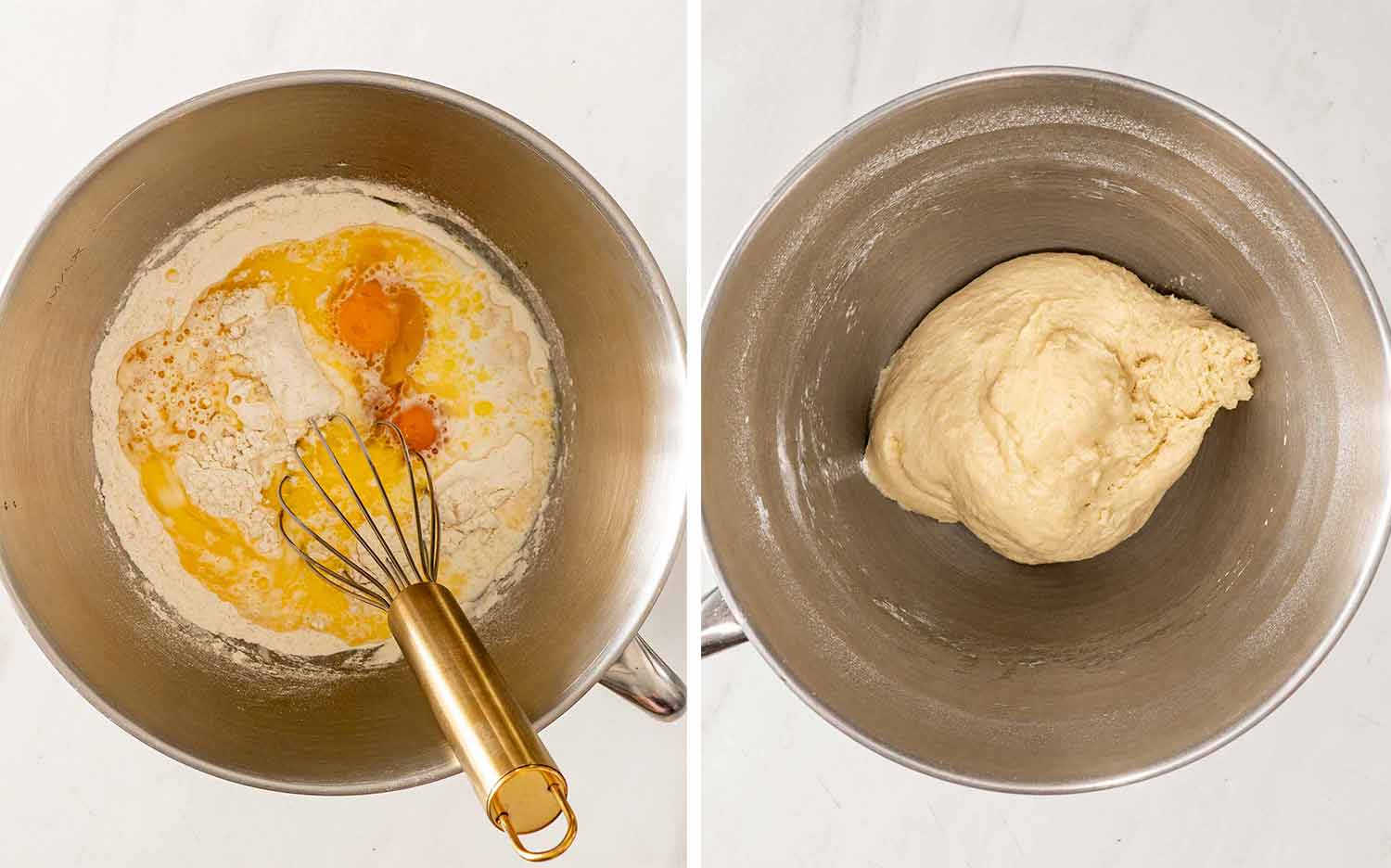
Make the dough: In a large bowl, whisk together the flour, granulated sugar, yeast, salt, and cinnamon. Add the warm milk, melted butter, and eggs, then mix until it comes together into a soft dough.
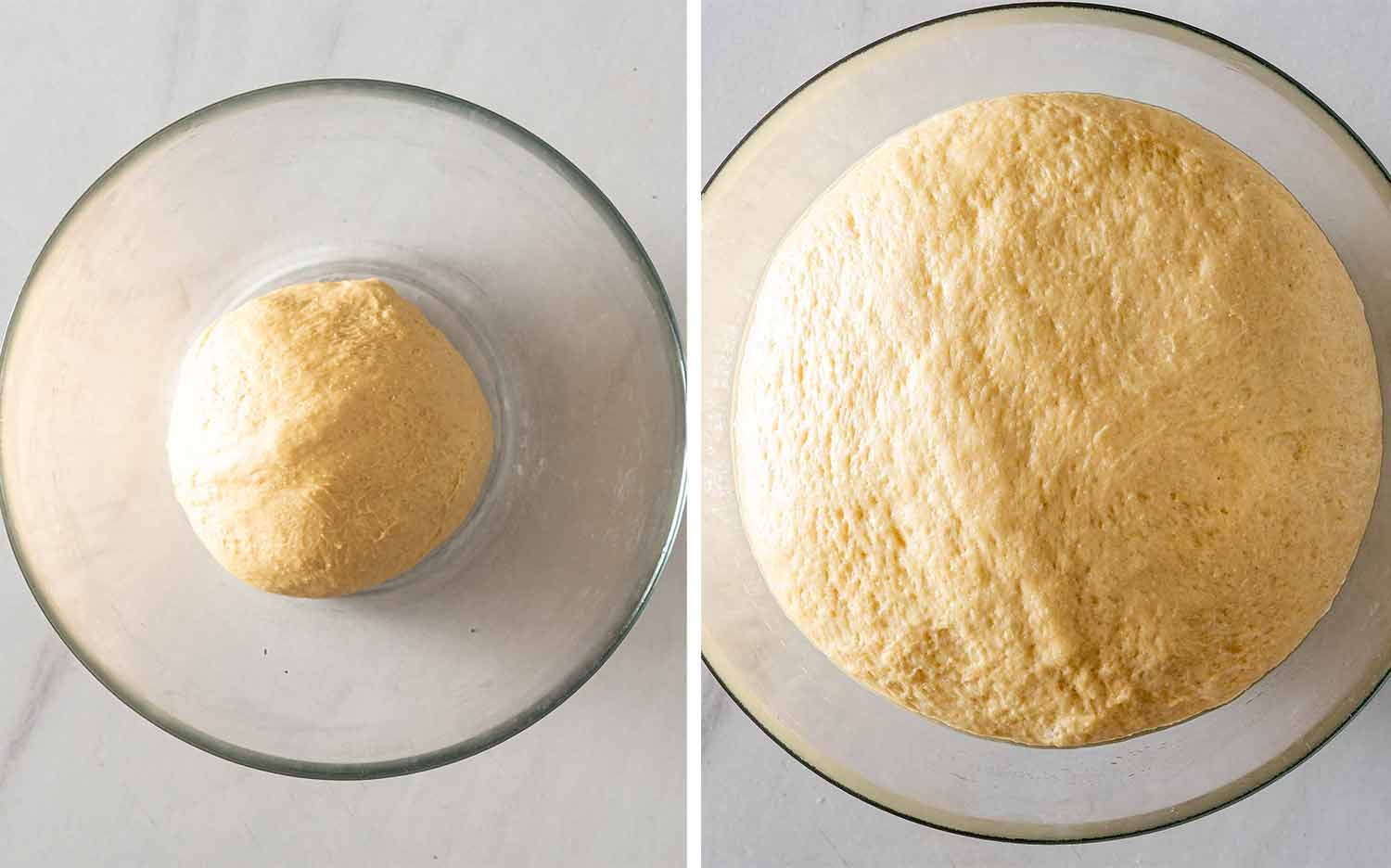
Knead and rise: Knead for about 5 minutes, until it’s smooth and springs back when you poke it. Put it in a greased bowl, cover it, and leave it somewhere warm for an hour, until doubled.
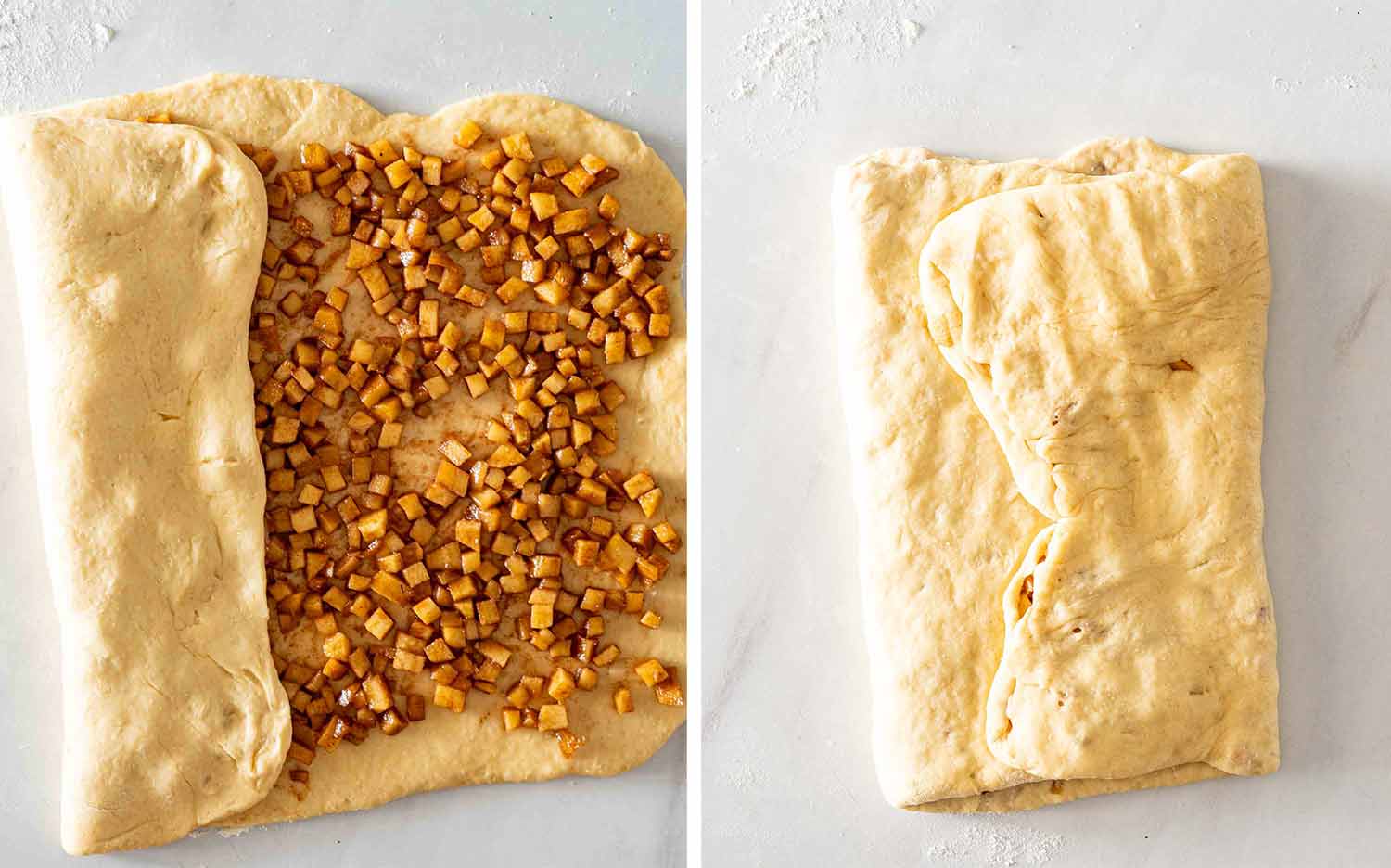
Fold in the apples: Punch the dough down and roll it out on a floured counter into a big rectangle, about ½ inch thick. Scatter the cooled apples evenly over the top. Fold the dough over them like a letter, roll it out again, then fold and roll one more time. It’ll look rough and messy, which is right.
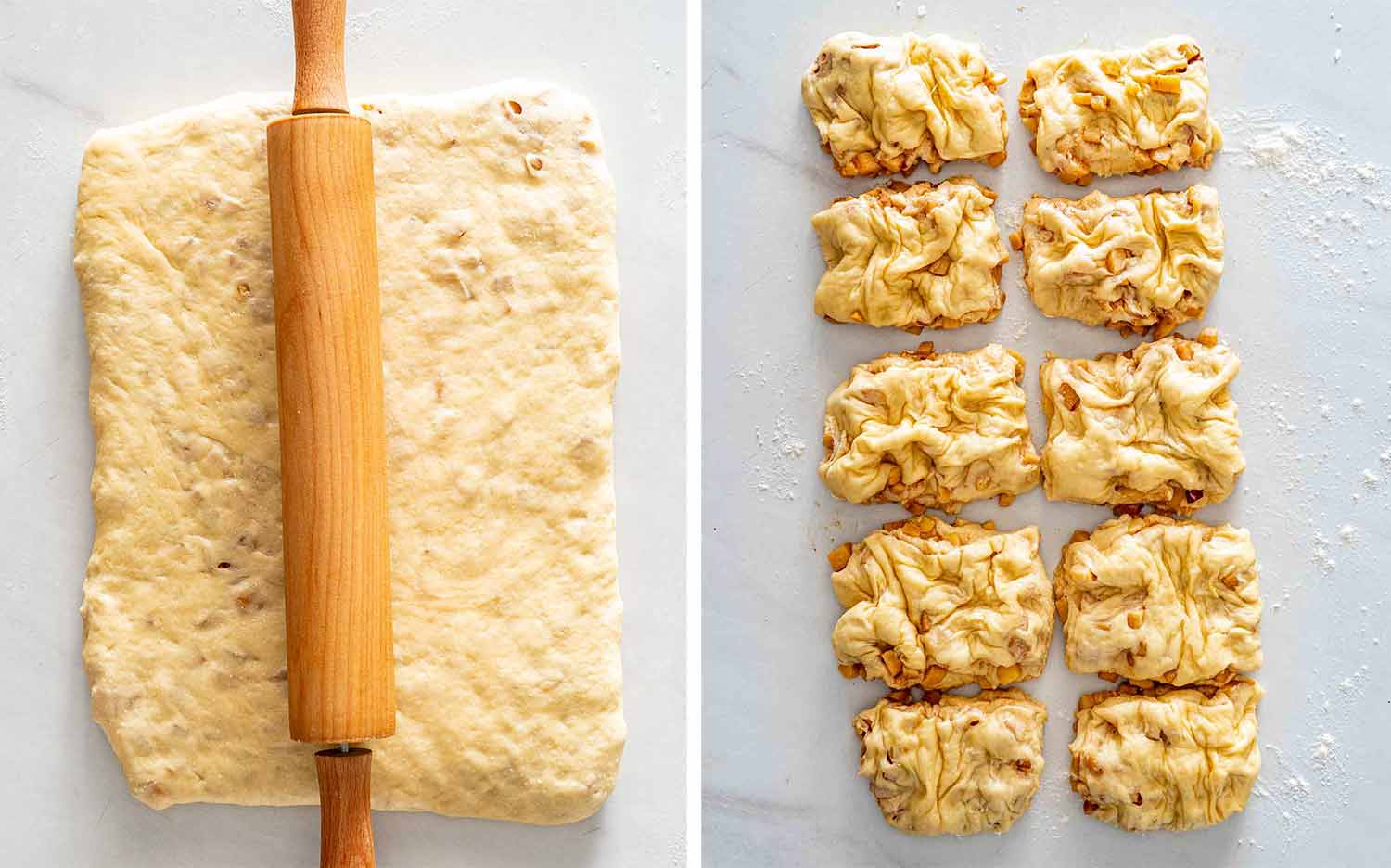
Cut the fritters: Roll the dough to about ¾ inch thick and cut it into 10 pieces. Don’t make them neat. Ragged is the look and ragged fries better.
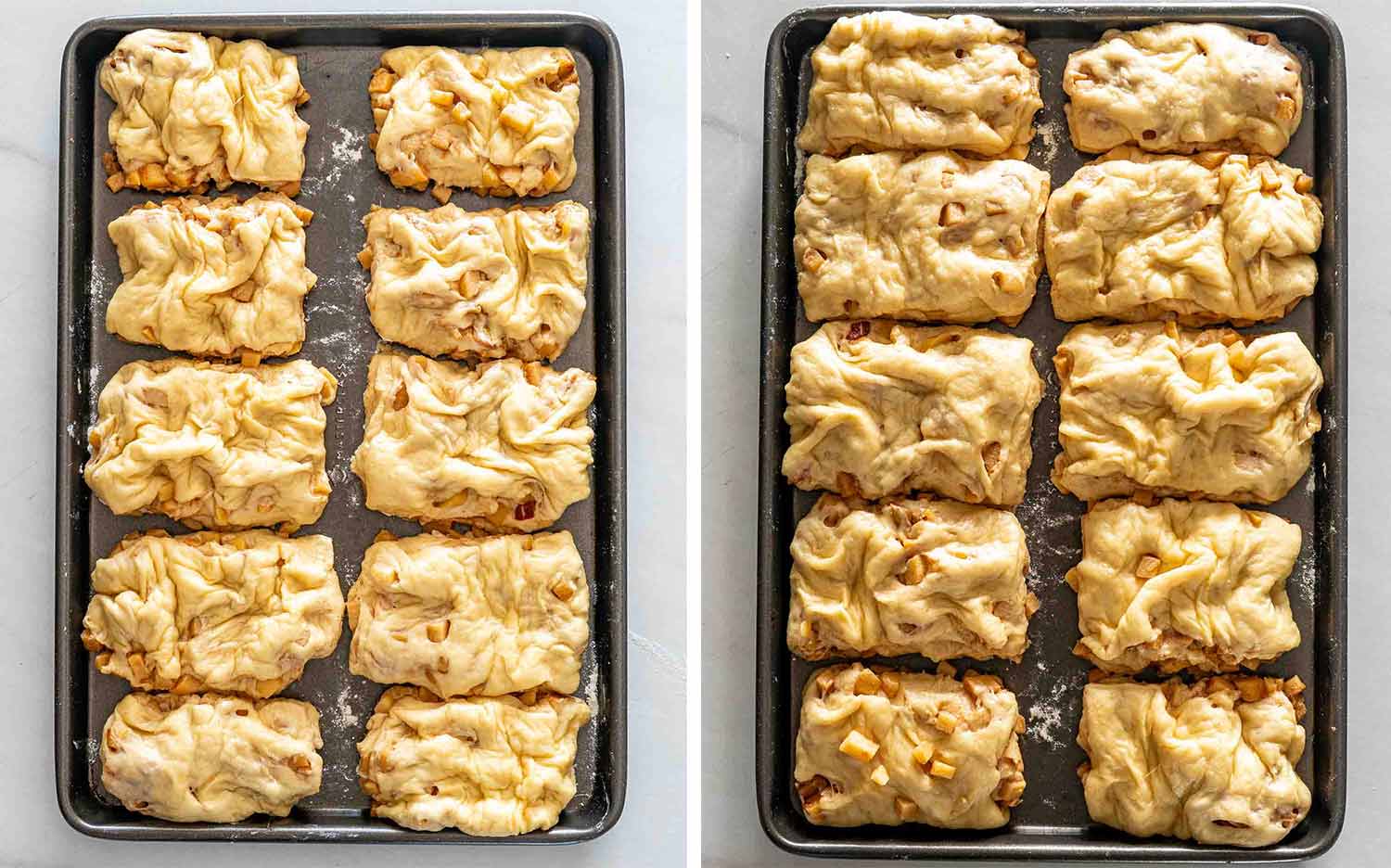
Second rise: Put the fritters on a floured tray, cover them loosely, and let them rise 30 minutes until they look puffy.
Heat the oil: Pour 2 inches of vegetable oil into a heavy pot and bring it to 350°F. Use a thermometer. Too cool and they soak up oil and go greasy, too hot and the outside burns before the middle cooks.
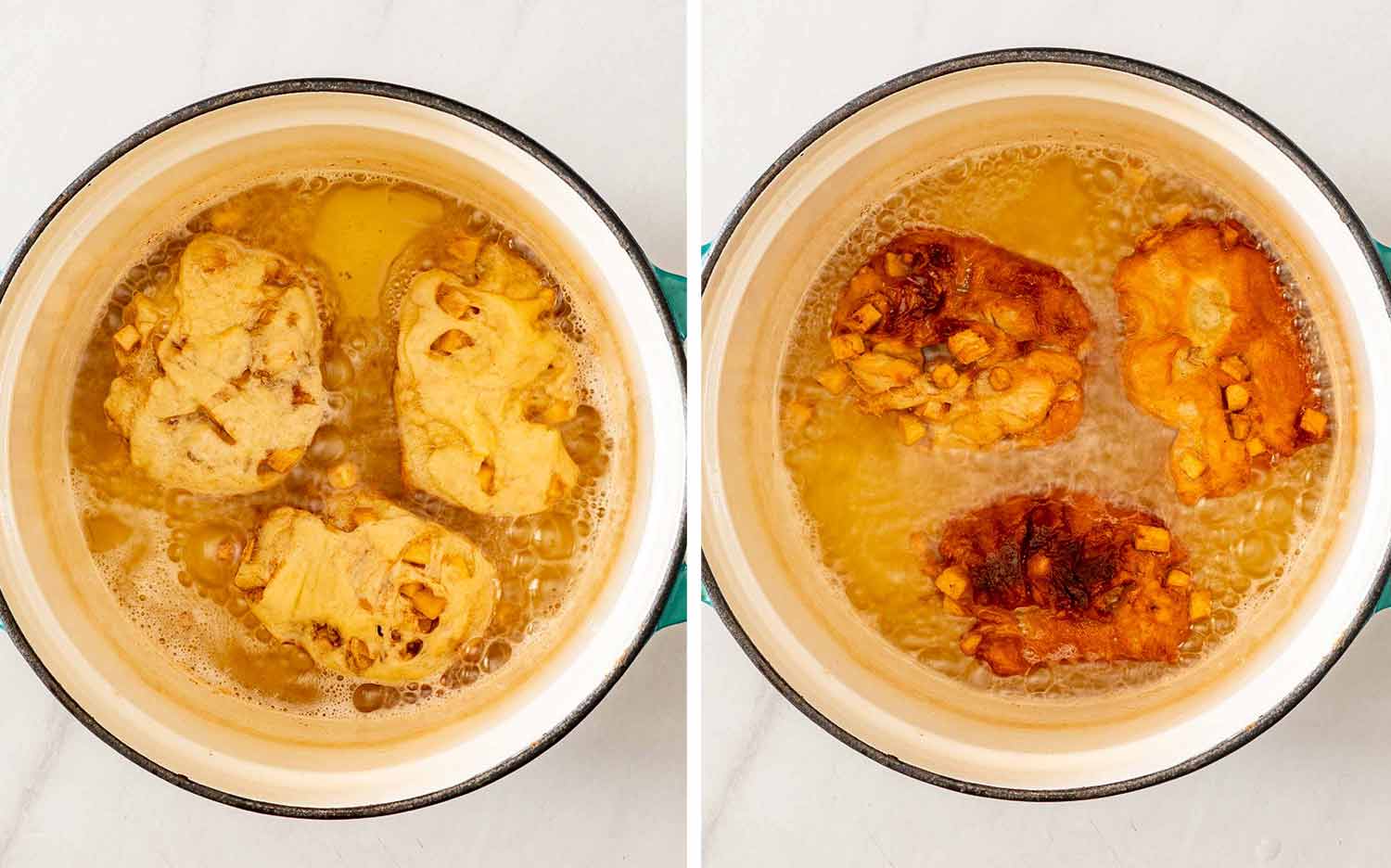
Fry in batches: Fry the fritters 2 to 3 minutes per side, until deep golden brown and cooked through. Don’t crowd the pot, 2 or 3 at a time depending on your pot size. Drain them on a wire rack set over paper towels and let them cool about 10 minutes.
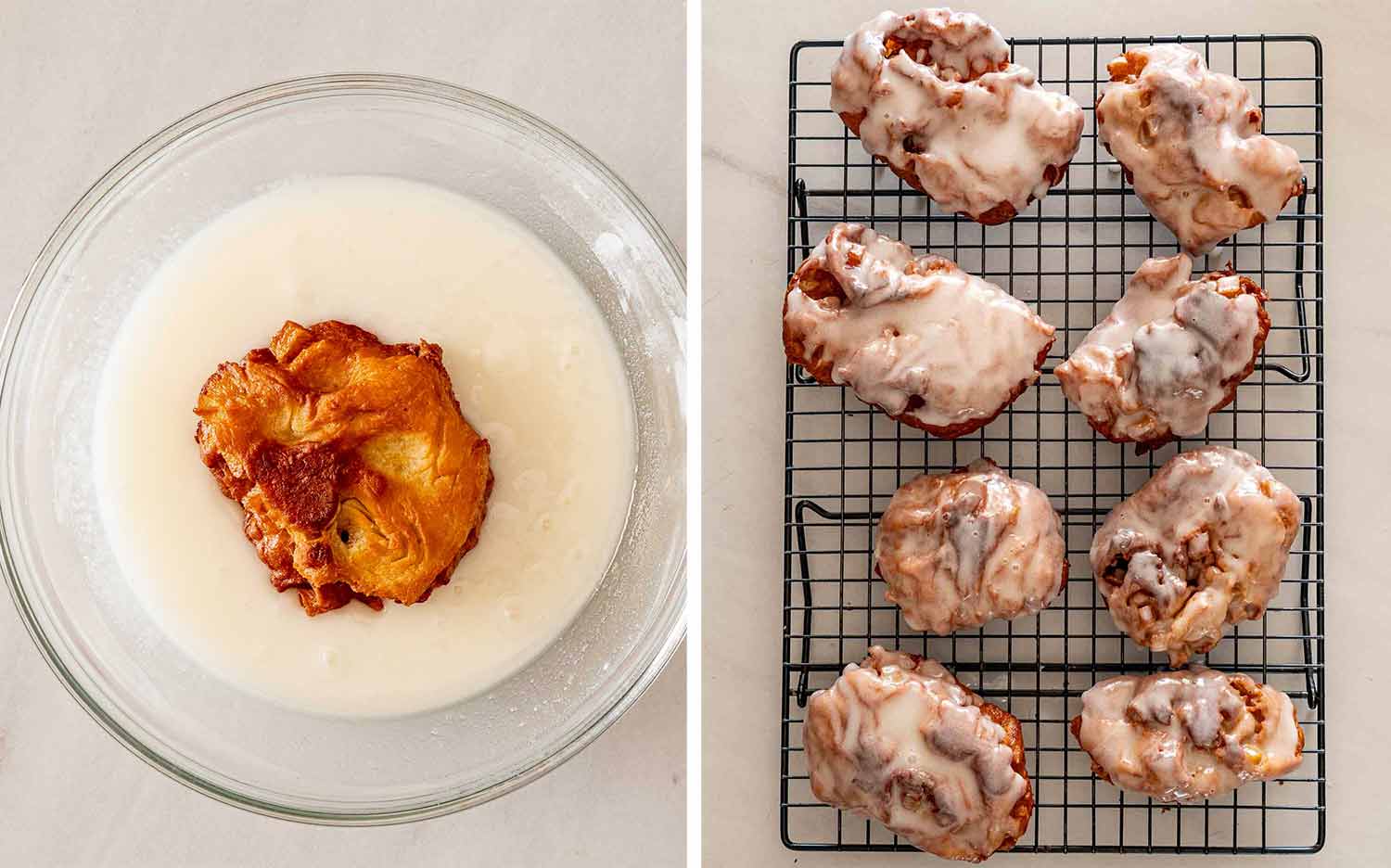
Glaze and set: Whisk the powdered sugar, milk, and vanilla until smooth. Dip the top of each fritter, or dunk the whole thing if you’re committed, then set it back on the rack so the glaze can set.
Tips
- Use a thermometer for the oil. Guessing is how fritters go greasy, and the temperature drops every time you add a batch, so check it between rounds.
- Let the apples cool completely. Not warm, not room temperature if room temperature means still a bit warm. Cold.
- Glaze them warm but not hot. Too hot and the glaze slides right off into a puddle. Ten minutes on the rack is about right.
- Don’t crowd the pot. Too many fritters at once drops the oil temperature and they all come out heavy.
- The rack over paper towels matters. Fritters sitting directly on paper towels steam on the bottom and go soggy.
Substitutions and Variations
- Active dry yeast works in place of instant. Proof it in the warm milk with a pinch of the sugar for 5 to 10 minutes first, then carry on.
- Any firm tart apple is fine. Granny Smith, Honeycrisp, Braeburn, Pink Lady.
- I haven’t tested these, so treat them as suggestions rather than part of the recipe, but a pinch of nutmeg or cardamom in the dough would sit well here, and swapping the milk in the glaze for apple cider would push it further into fall.
Storage and Make Ahead
Apple fritters are best the day you make them. That’s not me being precious, it’s just true of anything fried.
Store leftovers in an airtight container at room temperature for up to 2 days. They’ll soften. Warm them in a 300°F oven for 5 minutes to bring some of the crisp back.
You can freeze them unglazed for up to 2 months. Thaw at room temperature, warm in the oven, then glaze.
The dough can be made the night before. After the first rise, cover it and refrigerate overnight, then let it come to room temperature before you roll and fold.
Try These Recipes Next
- Jumbo Bakery Style Cinnamon Rolls
- Pumpkin Spice Loaf with Cream Cheese Swirl
- Brown Sugar Cinnamon Swirl Pancakes
- Almond Croissant Bars
- Maple Glazed Bacon Donuts
Old Fashioned Apple Fritters
Ingredients
For the cinnamon apples
- 2 large apples, peeled and diced small
- 1 tablespoon unsalted butter
- 2 tablespoons brown sugar
- 1 teaspoon ground cinnamon
For the dough
- 3½ cups all purpose flour
- ¼ cup granulated sugar
- 2¼ teaspoons instant yeast
- 1 teaspoon salt
- 1 teaspoon ground cinnamon
- ¾ cup warm milk
- ¼ cup unsalted butter, melted
- 2 large eggs
- Vegetable oil, for frying
For the glaze
- 2 cups powdered sugar
- 3 tablespoons milk
- ½ teaspoon vanilla extract
Instructions
- Melt the 1 tablespoon butter in a skillet over medium heat, then add the 2 diced apples, 2 tablespoons brown sugar, and 1 teaspoon cinnamon. Cook for 4 to 5 minutes, until softened and syrupy. Spread them on a plate and let them cool completely, since warm apples would melt the dough.
- In a large bowl, whisk together the 3½ cups flour, ¼ cup granulated sugar, 2¼ teaspoons instant yeast, 1 teaspoon salt, and 1 teaspoon cinnamon. Add the ¾ cup warm milk, ¼ cup melted butter, and 2 eggs, then mix until a soft dough forms.
- Knead for about 5 minutes, until smooth and elastic. Place the dough in a greased bowl, cover, and let it rise in a warm spot for 1 hour, or until doubled.
- Punch down the dough and roll it out on a floured surface into a large rectangle, about ½ inch thick. Scatter the cooled cinnamon apples evenly over the surface.
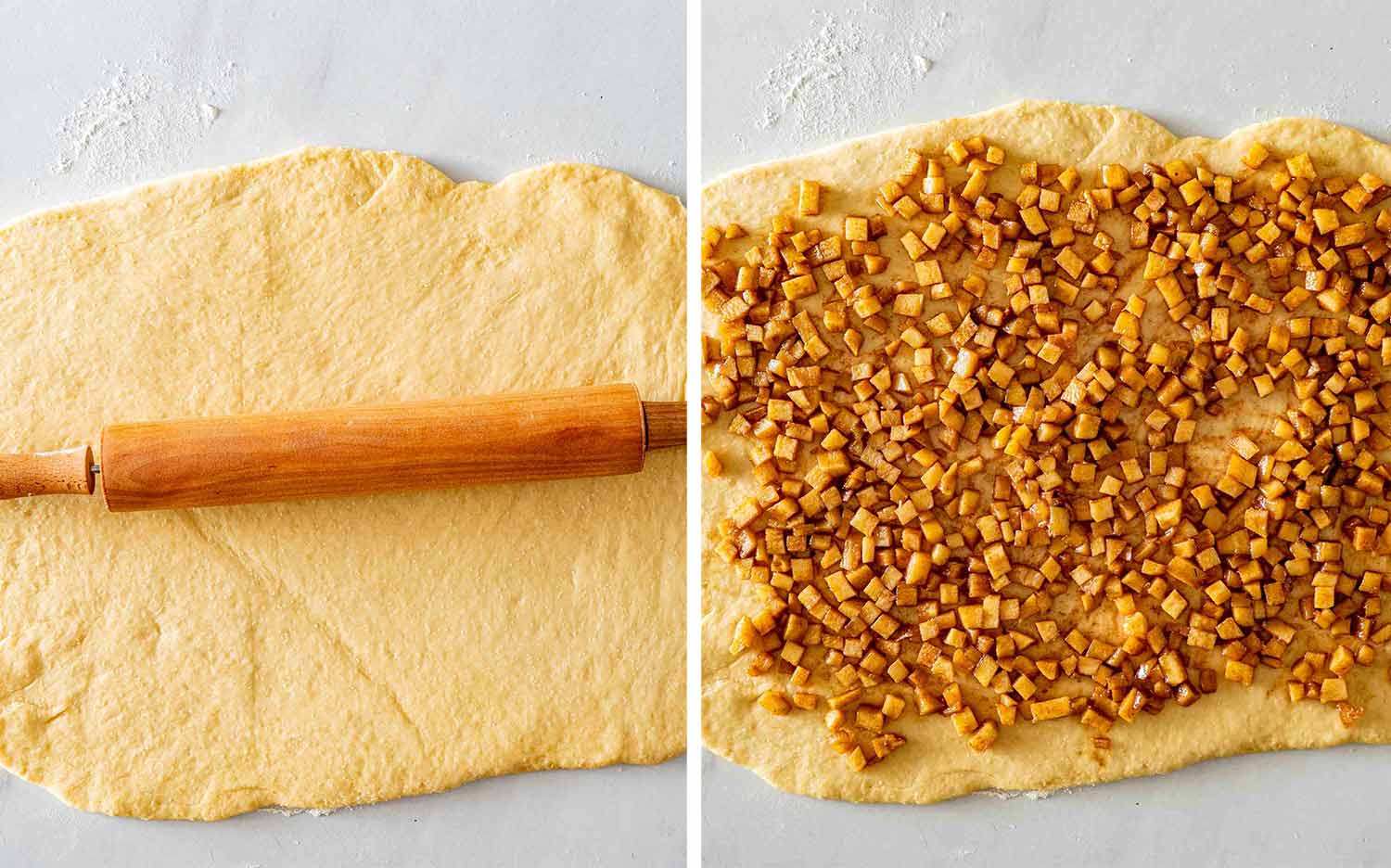
- Fold the dough over the apples like a letter, then roll it out again. Fold and roll one more time. This folding is what gives you those craggy layers and pockets of apple, so do not skip it. The dough will look rough and messy, which is exactly right.
- Roll the dough to about ¾ inch thick and cut it into 10 large pieces. They do not need to be neat, ragged edges are the whole look.
- Place the fritters on a floured tray, cover loosely, and let them rise for 30 minutes, until puffy.
- Pour 2 inches of vegetable oil into a heavy pot and heat it to 350°F (175°C). Getting the temperature right is the whole game, too cool and they go greasy, too hot and they burn before the inside cooks.
- Working in batches, fry the fritters for 2 to 3 minutes per side, until deep golden brown and cooked through. Drain on a wire rack set over paper towels and let them cool for about 10 minutes.
- Make the glaze. Whisk together the 2 cups powdered sugar, 3 tablespoons milk, and ½ teaspoon vanilla until smooth. Dip the top of each fritter into the glaze, or dunk them fully, then set them back on the rack to let the glaze set.
Recipe Notes
- Cool the apples completely. Warm apples will melt the dough and you won’t get it back. Spread them on a plate and let them cool all the way down.
- Don’t skip the folding. Rolling and folding twice is what creates the layers and the craggy edges. Stirring the apples into the dough gives you a sweet roll instead.
- Leave the edges ragged. Don’t tidy up the cut pieces. Rough edges fry crispier than clean ones.
- Oil temperature. Use a thermometer and hold 350°F. Too cool and they go greasy, too hot and they burn before the inside cooks. The temperature drops when you add fritters, so let it recover between batches.
- Drain on a rack. Set a wire rack over paper towels. Fritters sitting straight on paper towels steam and go soft underneath.
- Glaze timing. Cool about 10 minutes before glazing. Too hot and the glaze runs off.
- Make ahead. The dough can rise overnight in the fridge. Bring it to room temperature before rolling and folding.
- Storage. Best the day they’re made. Airtight at room temperature up to 2 days, warmed in a 300°F oven to crisp back up. Freeze unglazed up to 2 months.
Nutrition Information
Frequently Asked Questions
You can bake them at 375°F for about 15 minutes, but be honest with yourself about what you’re making. They’ll be apple rolls. The craggy fried edges are the point of a fritter.
Firm and tart. Granny Smith, Honeycrisp, Braeburn. Soft apples like McIntosh break down into mush.
The oil was too cool. It needs to be at 350°F when the fritters go in, and it drops every batch, so let it come back up between rounds.
Yes. Proof it in the warm milk with a pinch of sugar for 5 to 10 minutes before mixing.
Probably not. This is a soft enriched dough and a little tack is normal. Add flour a tablespoon at a time if you need to, but go easy, too much flour makes them tough.
Sure, cut 15 or 16 instead of 10 and knock a minute off each side in the oil.




Leave a Reply