


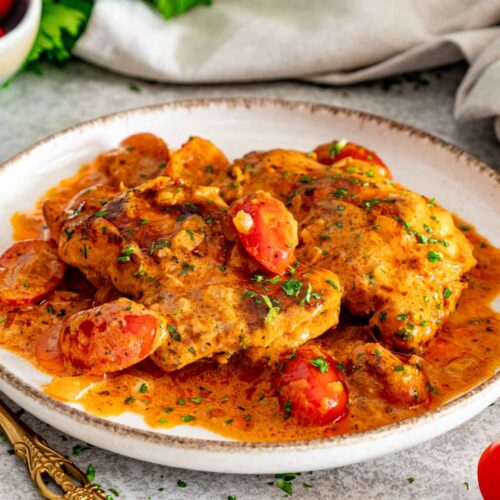
Creamy Sundried Tomato Chicken Thighs are marinated in tomato paste and paprika, seared until deeply golden, then finished right in a creamy sundried tomato sauce. The thighs come out of the pan half done on purpose and finish cooking in the sauce, which means everything they’re giving off ends up back in your dinner. Serve it with something that can mop up a plate.
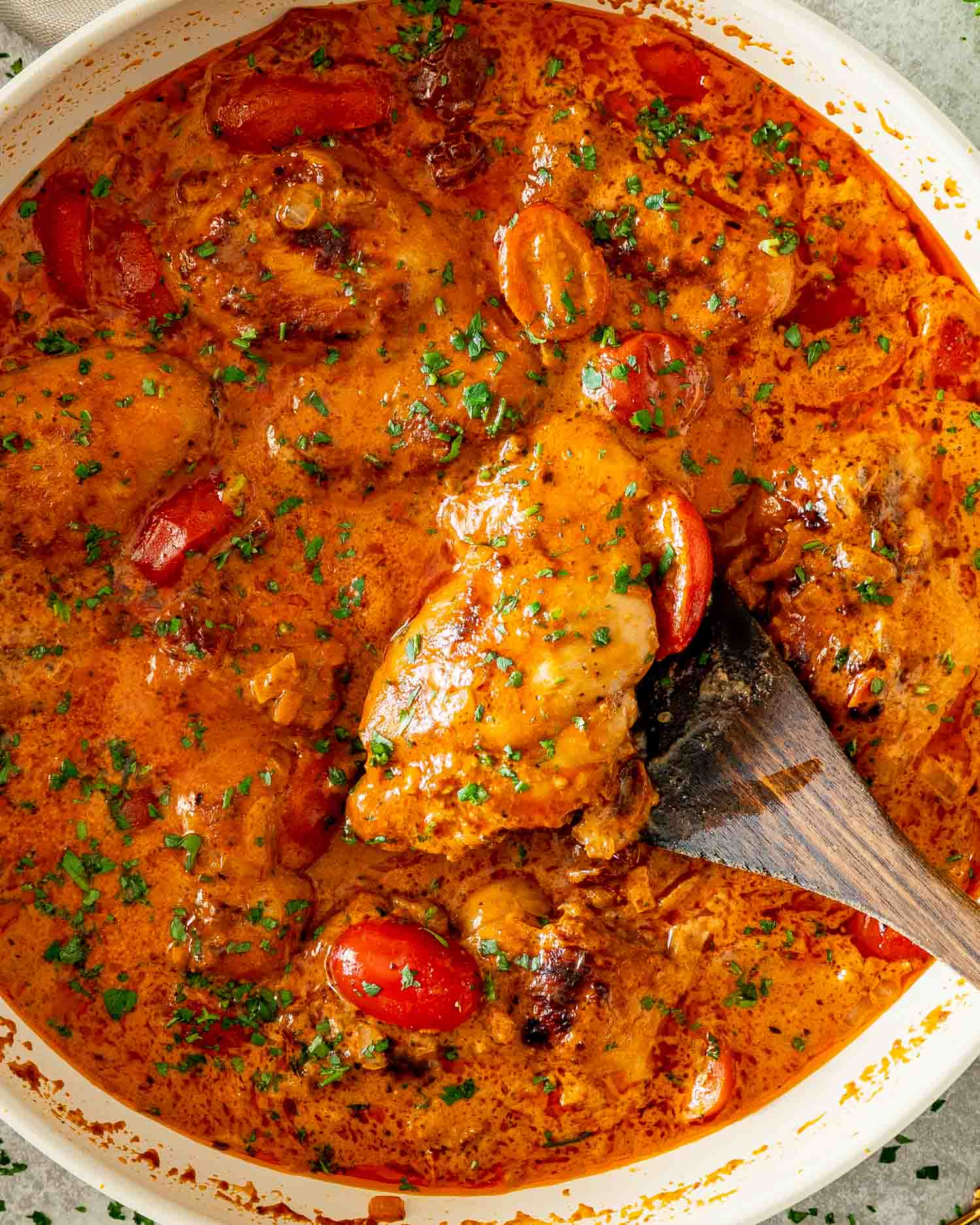
A One Skillet Dinner That Tastes Like a Restaurant Made It
This is a skillet dinner that looks like it came out of a restaurant kitchen, and the reason is a tube of tomato paste doing double duty.
Most sundried tomato chicken recipes put the paste in the sauce and stop there. Here it goes on the chicken first, in the marinade, where it clings to the thighs and caramelizes in the pan. That’s what gives them that deep mahogany color. Then more paste goes into the sauce. Same tube, 2 jobs, and the second one is the one everybody skips.
Now, about the thighs. I’m going to get comments asking if breasts work, because I always do, and the answer is yes but you shouldn’t. These thighs sit in a simmering sauce for 15 minutes and come out better for it. Ask a chicken breast to do that and it’ll go stringy and punish you for the rest of the meal.
Thirty minutes of marinating is the minimum, overnight is better. That requires deciding what’s for dinner before 4 in the afternoon, which some people manage. I’ve been doing this professionally since 2011 and I still stand in front of my own fridge at 5 o’clock like a stranger.
This recipe serves 5, and there’s enough sauce to warrant bread.
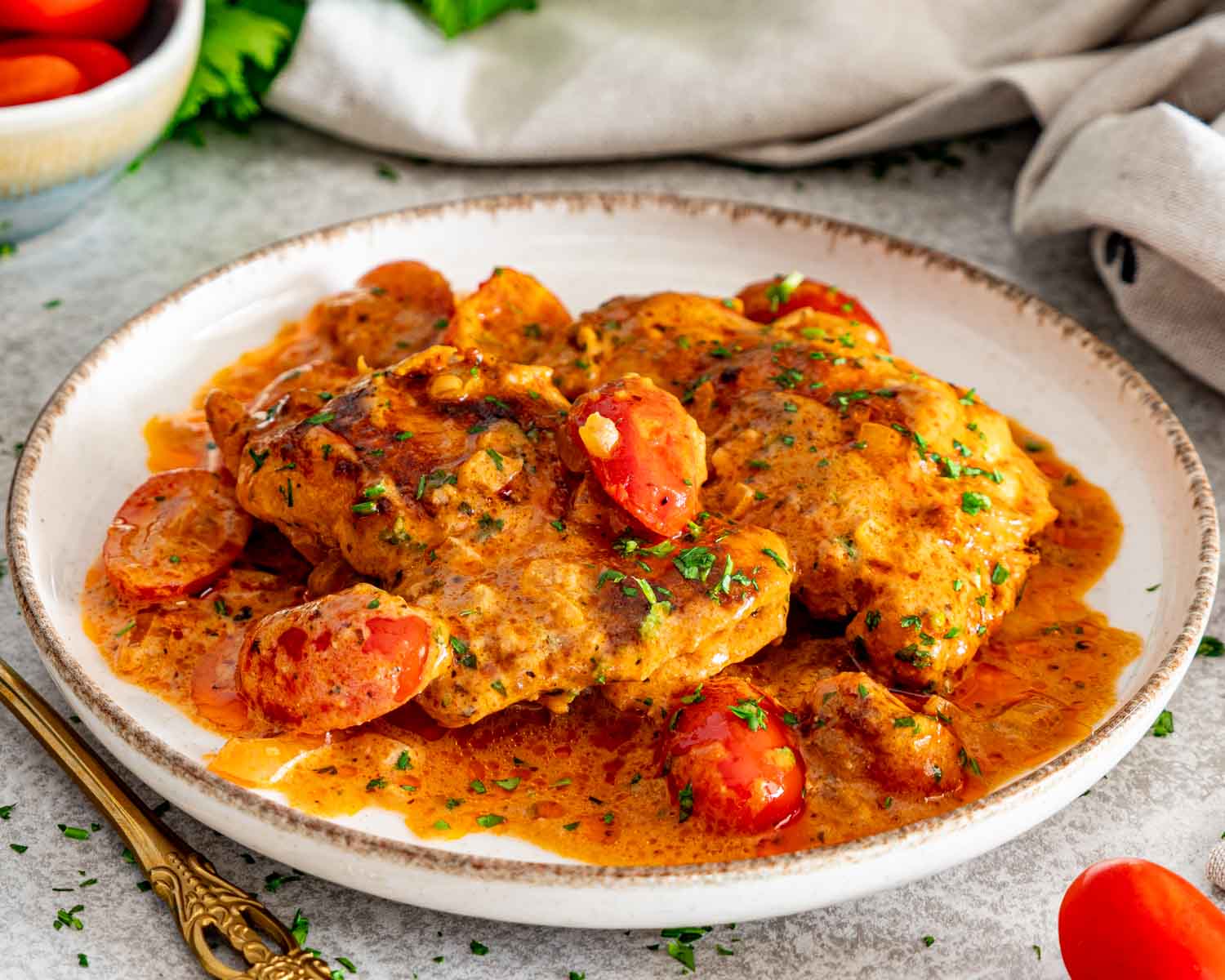
The Secret Is Finishing the Chicken in the Sauce
Most recipes tell you to cook the chicken through, take it out, build the sauce, and put it back. That works. You also leave something behind every single time, and it’s sitting on that plate on your counter.
Here the thighs only get seared. Four to 5 minutes a side, until they’re deeply golden and still completely raw in the middle. Then they go back into the skillet and finish cooking submerged in the sauce for 12 to 15 minutes.
Two things happen in that window. The chicken finishes gently in liquid, which is much harder to ruin than a dry pan on high heat. And everything the thighs let go of while they cook goes into the sauce instead of into the sink.
The sauce also thickens during those same 15 minutes. So one step cooks your chicken and finishes your sauce, which is the kind of efficiency I find genuinely moving.
Just pour the juices from the resting plate back in when the chicken goes home. That’s free flavor. Don’t be the person who rinses it down the drain.
Ingredients in Creamy Sundried Tomato Chicken
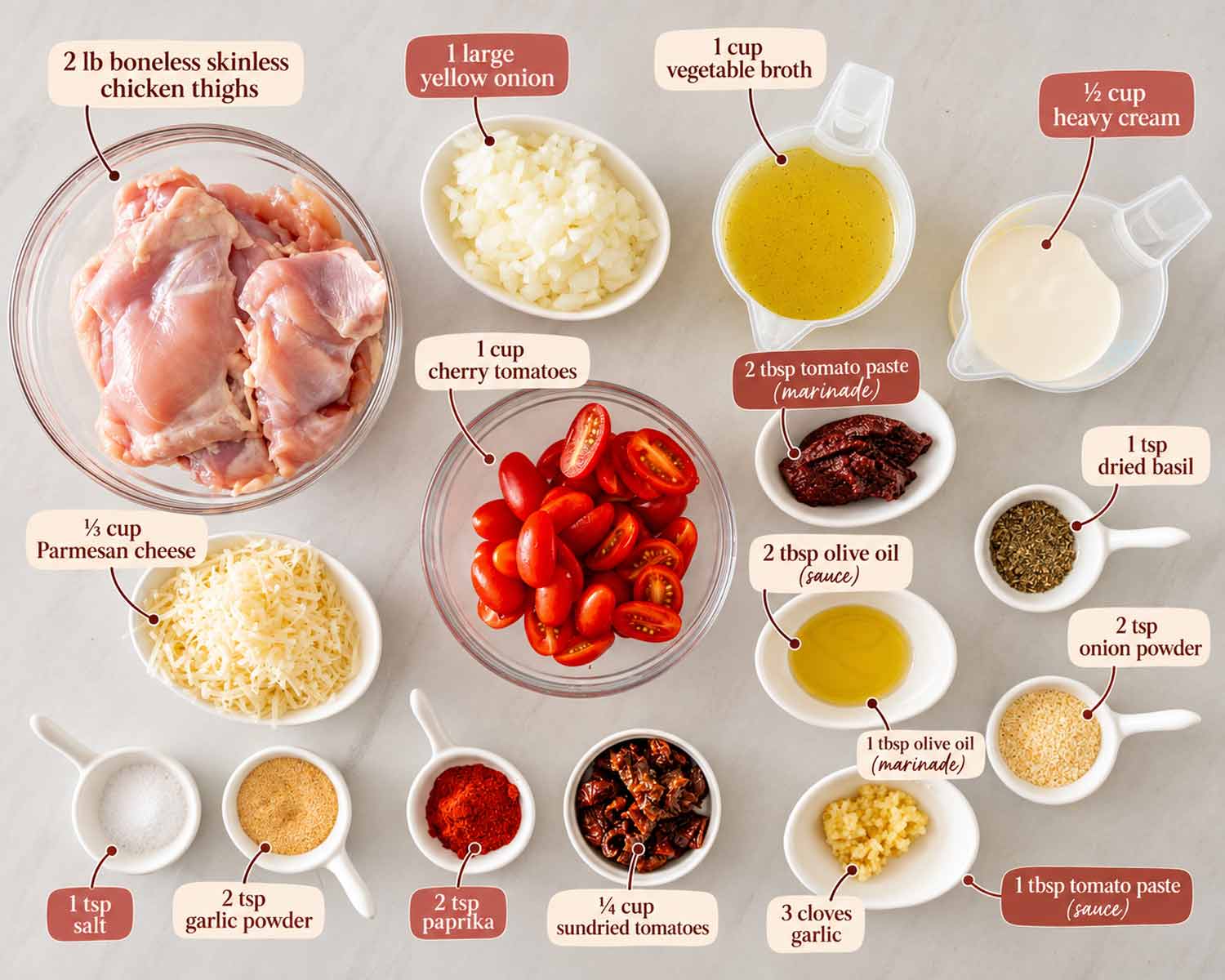
- Boneless skinless chicken thighs (2 pounds): Thighs. I’ll say it again in the FAQ and probably in the comments. They take a 15 minute simmer without complaint and their fat is doing half the work in this sauce.
- Tomato paste (2 tablespoons for the marinade, plus 1 tablespoon for the sauce): In the marinade it caramelizes on the chicken and builds that color. In the sauce it deepens everything. One tube, 2 jobs.
- Olive oil (1 tablespoon for the marinade, 2 tablespoons for the sauce): The marinade oil helps everything grip the chicken. The rest is for searing.
- Garlic powder and onion powder (2 teaspoons each): Marinade only. Powders coat evenly in a way fresh garlic can’t, and even coverage is the whole point of a marinade that’s basically a paste.
- Paprika (2 teaspoons): Color and warmth. Sweet paprika, not smoked, since the sundried tomatoes already bring plenty of intensity.
- Dried basil (1 teaspoon): In the marinade, where it has time to soften against the oil.
- Salt (1 teaspoon): In the marinade. Go easy adding more later, because Parmesan and sundried tomatoes both show up already salted.
- Yellow onion (1 large, finely chopped): Finely chopped so it melts into the sauce instead of sitting in it in chunks. Give it the full 3 to 4 minutes.
- Garlic (3 cloves, minced): Fresh this time. One minute in the pan and no longer, or it turns bitter and there’s no coming back from that.
- Sundried tomatoes (¼ cup, chopped, oil packed): Oil packed, not the leathery ones in a bag. They’re softer, more intense, and they don’t need soaking. A little of that oil coming along with them is a feature.
- Vegetable broth (1 cup): Loosens the pan and becomes the body of the sauce. Chicken broth is a straight swap if that’s what’s already open.
- Heavy cream (½ cup): Only half a cup, which is less than most creamy skillet recipes ask for. The tomato paste and Parmesan are carrying a lot of the weight here.
- Cherry tomatoes (1 cup, halved): They go in whole and soften in the sauce until they burst. This is the only thing standing between you and a dish that’s just rich, all the way down, with nothing to interrupt it.
- Parmesan cheese (⅓ cup, grated): From a block. Pre shredded Parmesan is coated so it won’t clump in the bag, and that same coating is what turns your beautiful sauce into something with a texture. I’m not going to stop saying this.
How to Make Creamy Sundried Tomato Chicken Thighs
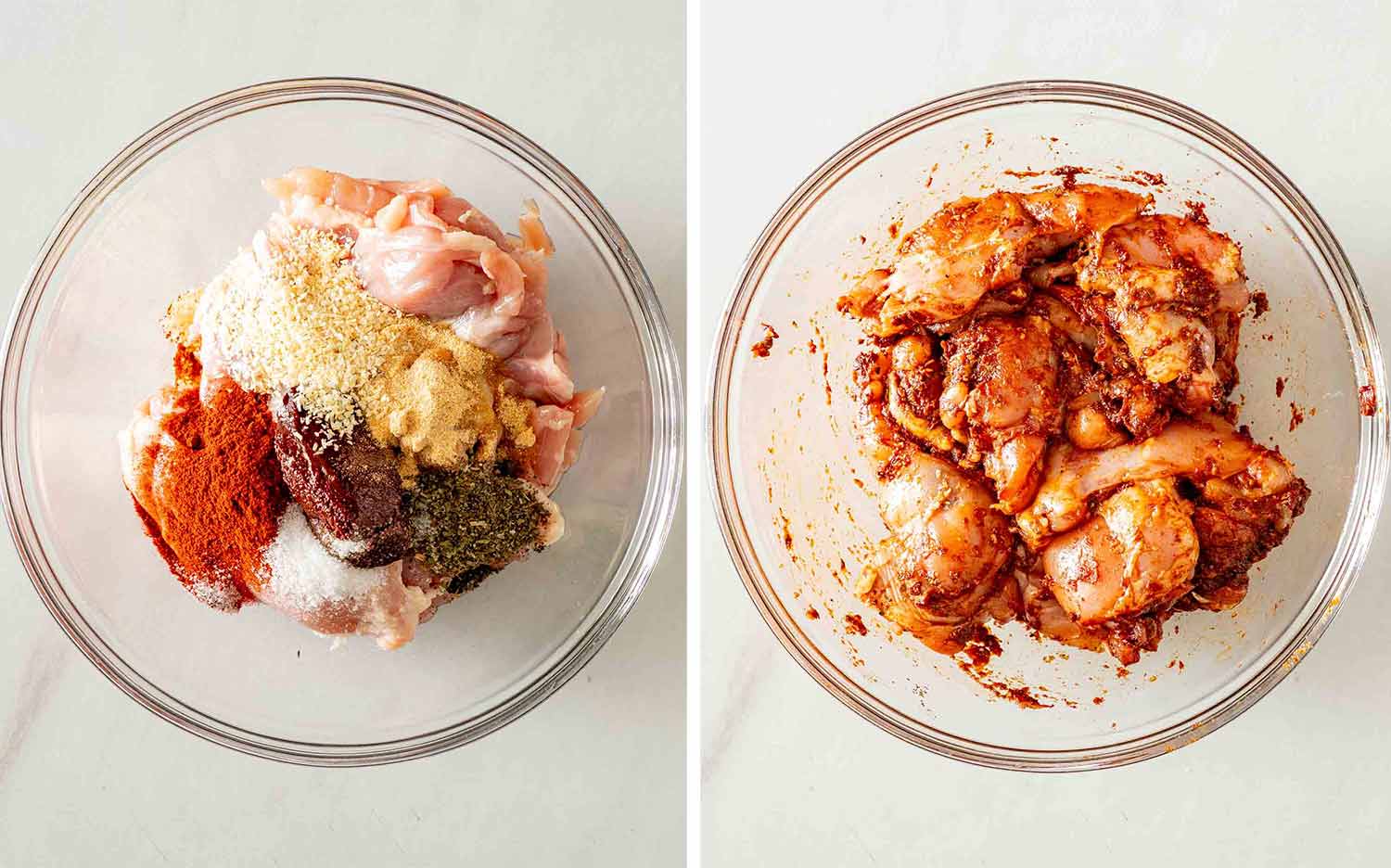
Marinate the chicken: In a bowl, toss the chicken thighs with the tomato paste, olive oil, garlic powder, onion powder, paprika, dried basil, and salt until every piece is properly coated. It’ll look like a thick red paste and that’s exactly right. Let it sit for at least 30 minutes, or cover it and leave it in the fridge overnight if you’re organized.
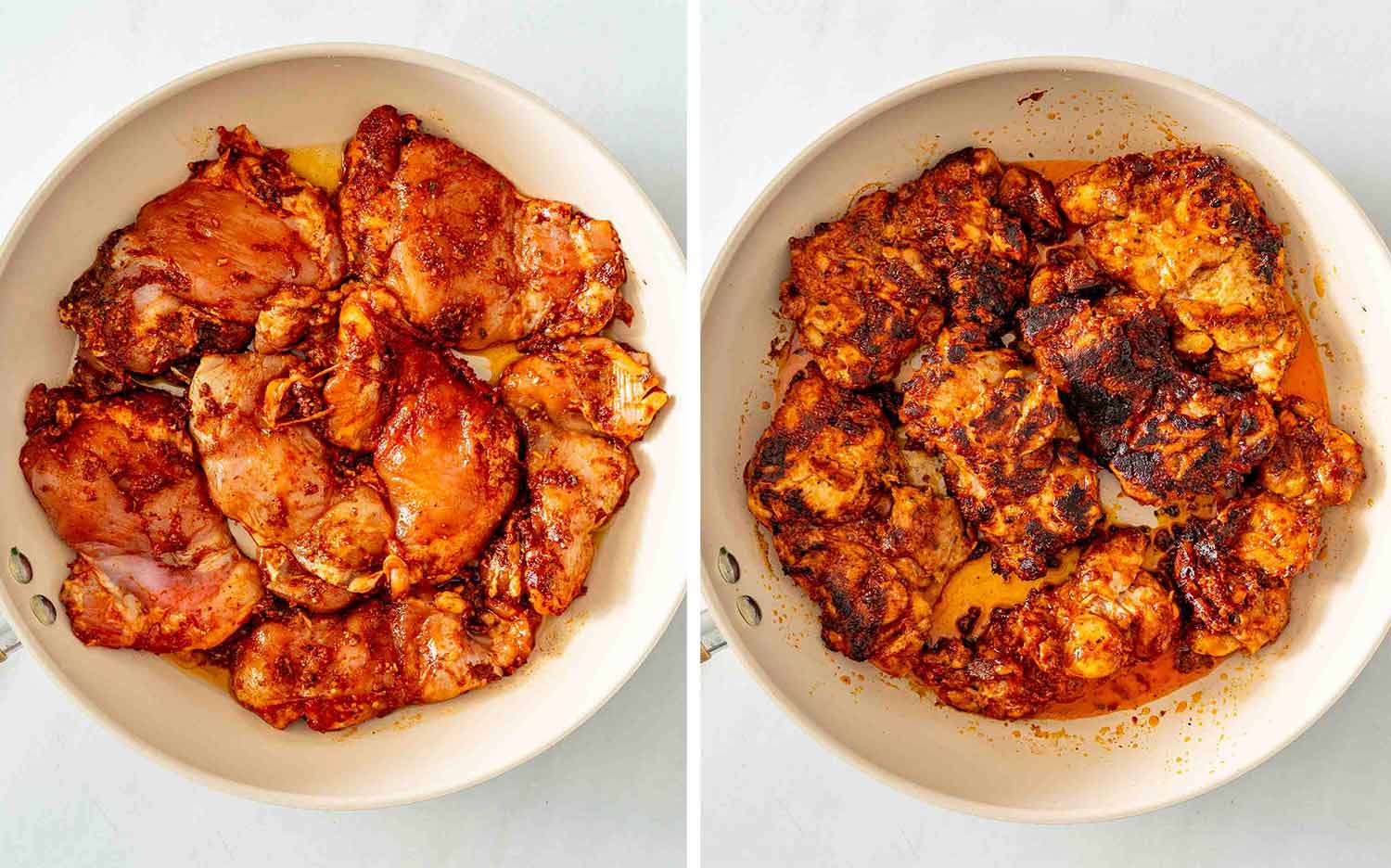
Sear the thighs: Heat the olive oil in a large skillet over medium high. Add the chicken and sear for 4 to 5 minutes per side, until deeply golden. They don’t need to be cooked through, they’re going back in later to finish. Move them to a plate and leave the juices that collect there, you’ll want those.
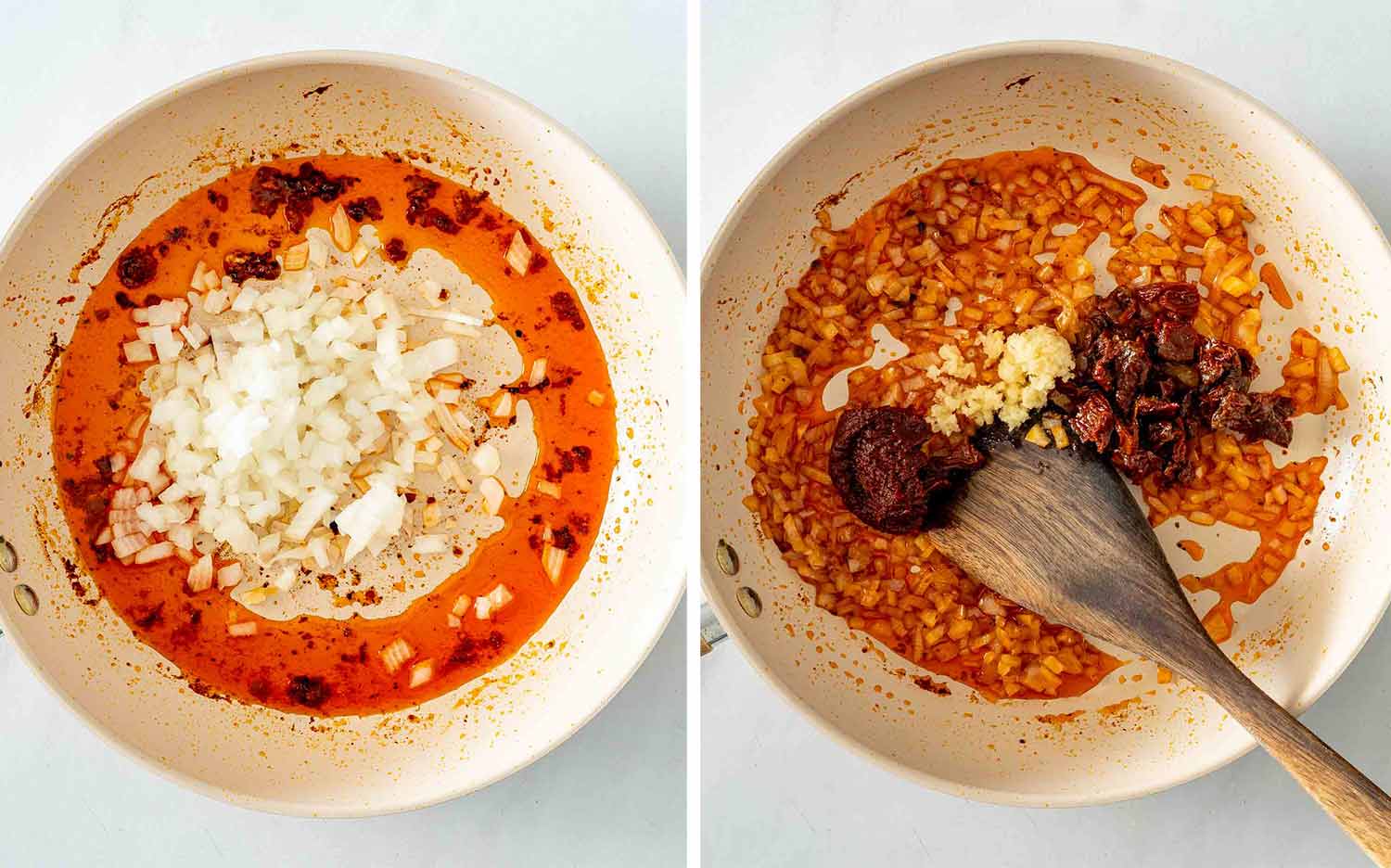
Soften the onion: Lower the heat to medium and add the chopped onion to the same skillet. Cook for 3 to 4 minutes until softened, scraping up all the browned bits stuck to the bottom as you go. That’s where the flavor lives, so get every last one.
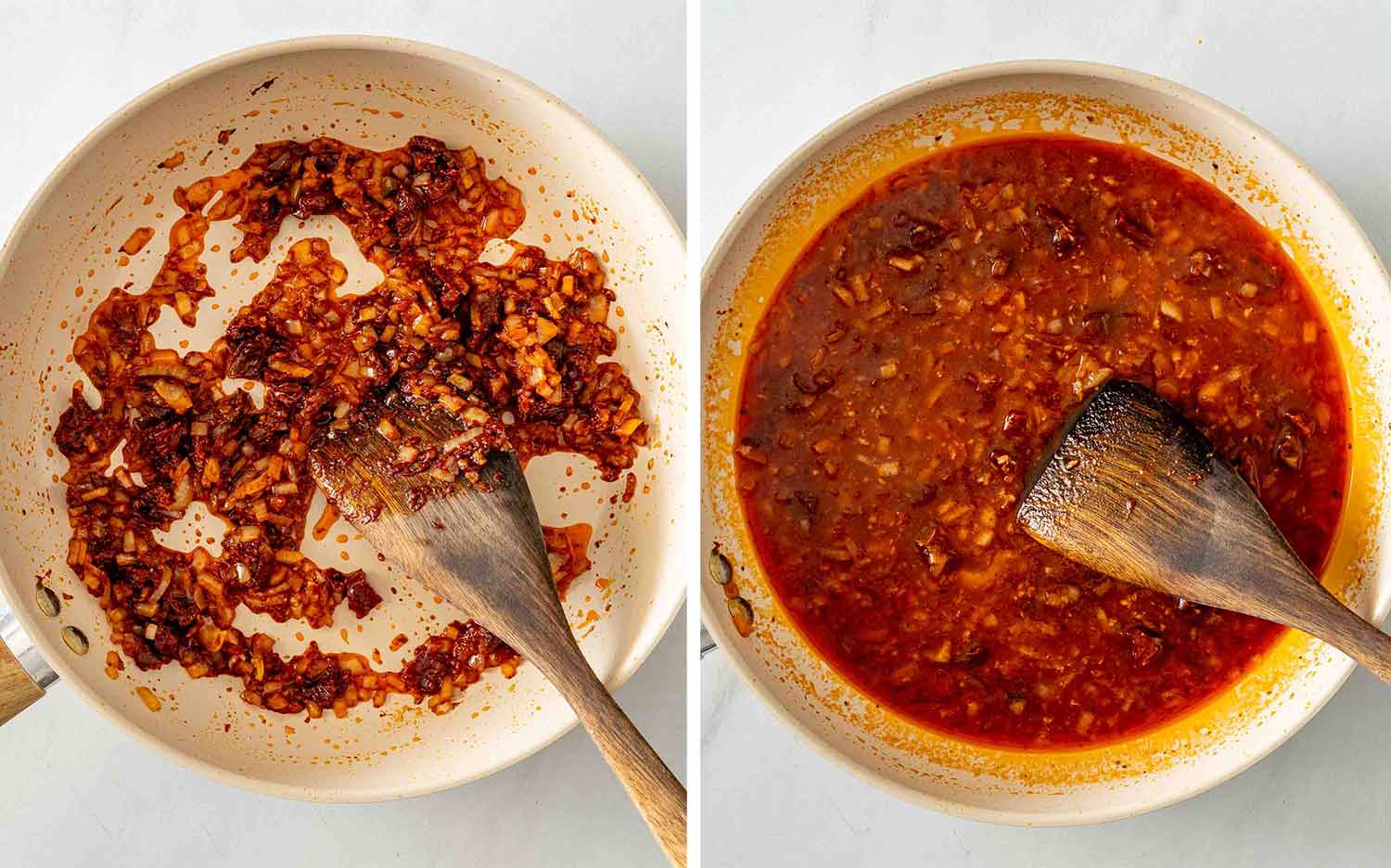
Build the base: Stir in the garlic, tomato paste, and chopped sundried tomatoes. Cook for about a minute, until it smells like something and the paste has darkened slightly. Don’t walk away during this part.
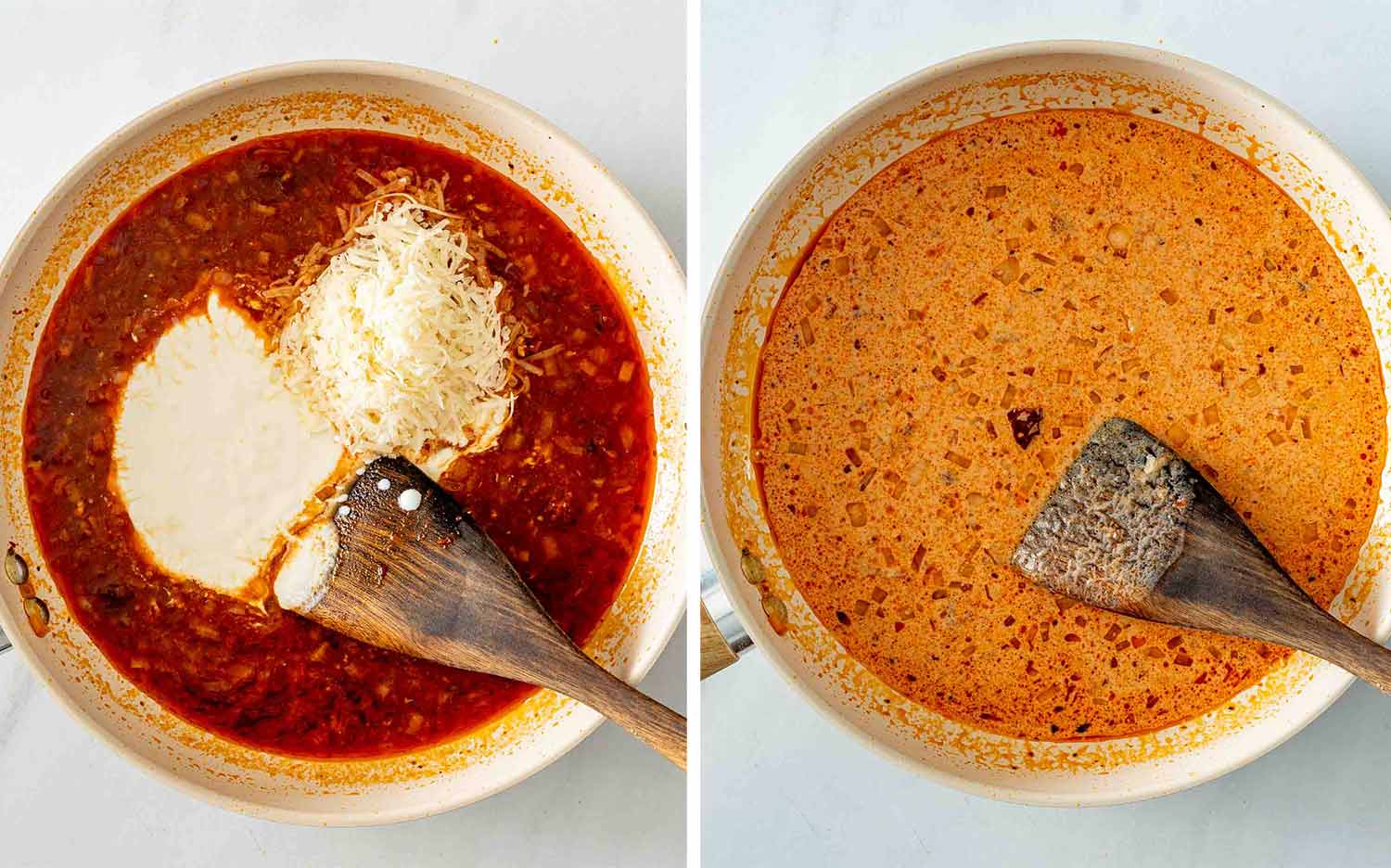
Make the sauce: Pour in the vegetable broth and stir everything loose into a sauce. Bring it to a gentle simmer, then stir in the heavy cream and Parmesan until smooth.
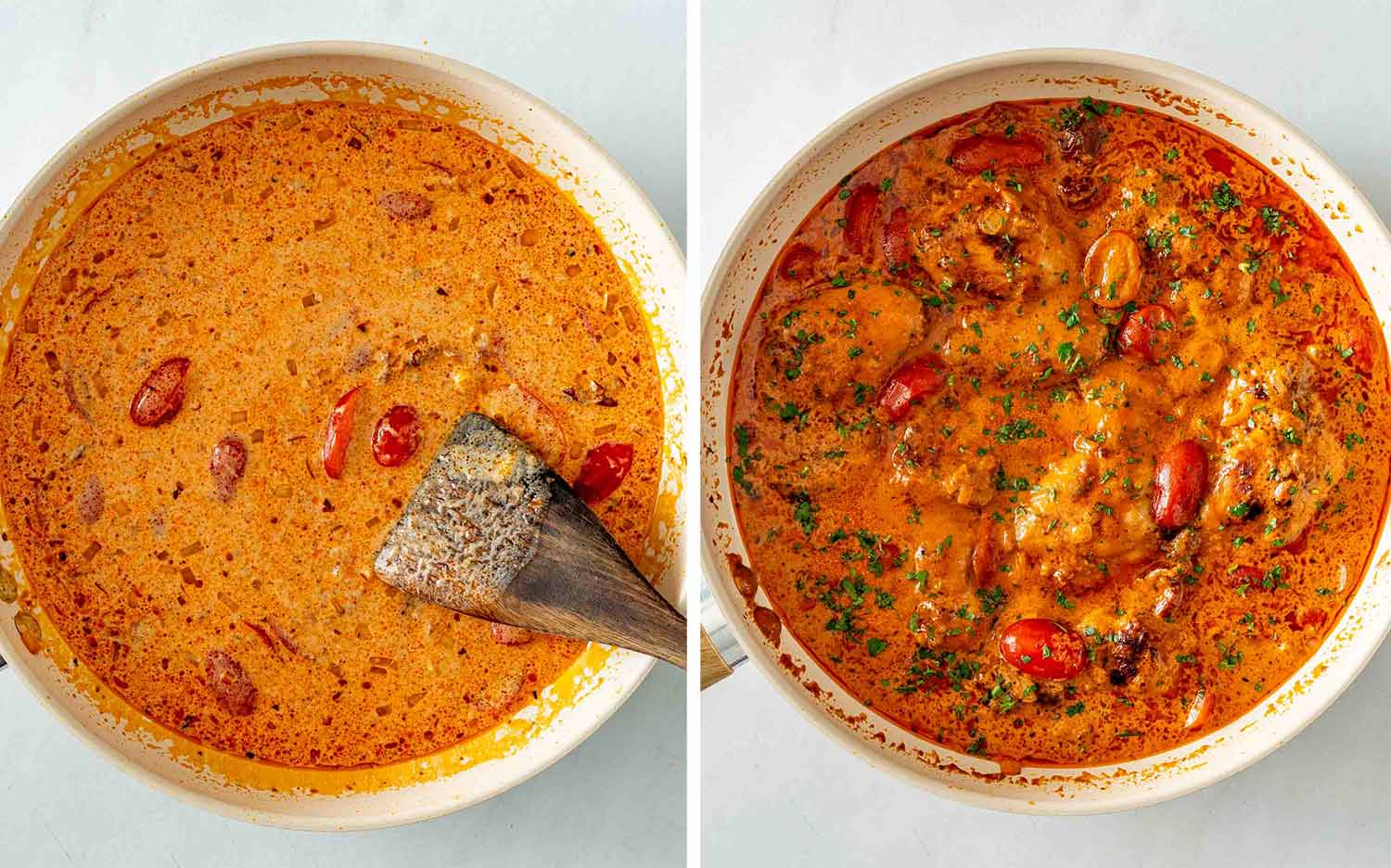
Finish the chicken in the sauce: Add the halved cherry tomatoes, then nestle the thighs back into the skillet along with any juices from the plate. Simmer for 12 to 15 minutes, until the chicken is cooked through and the sauce has thickened around it.
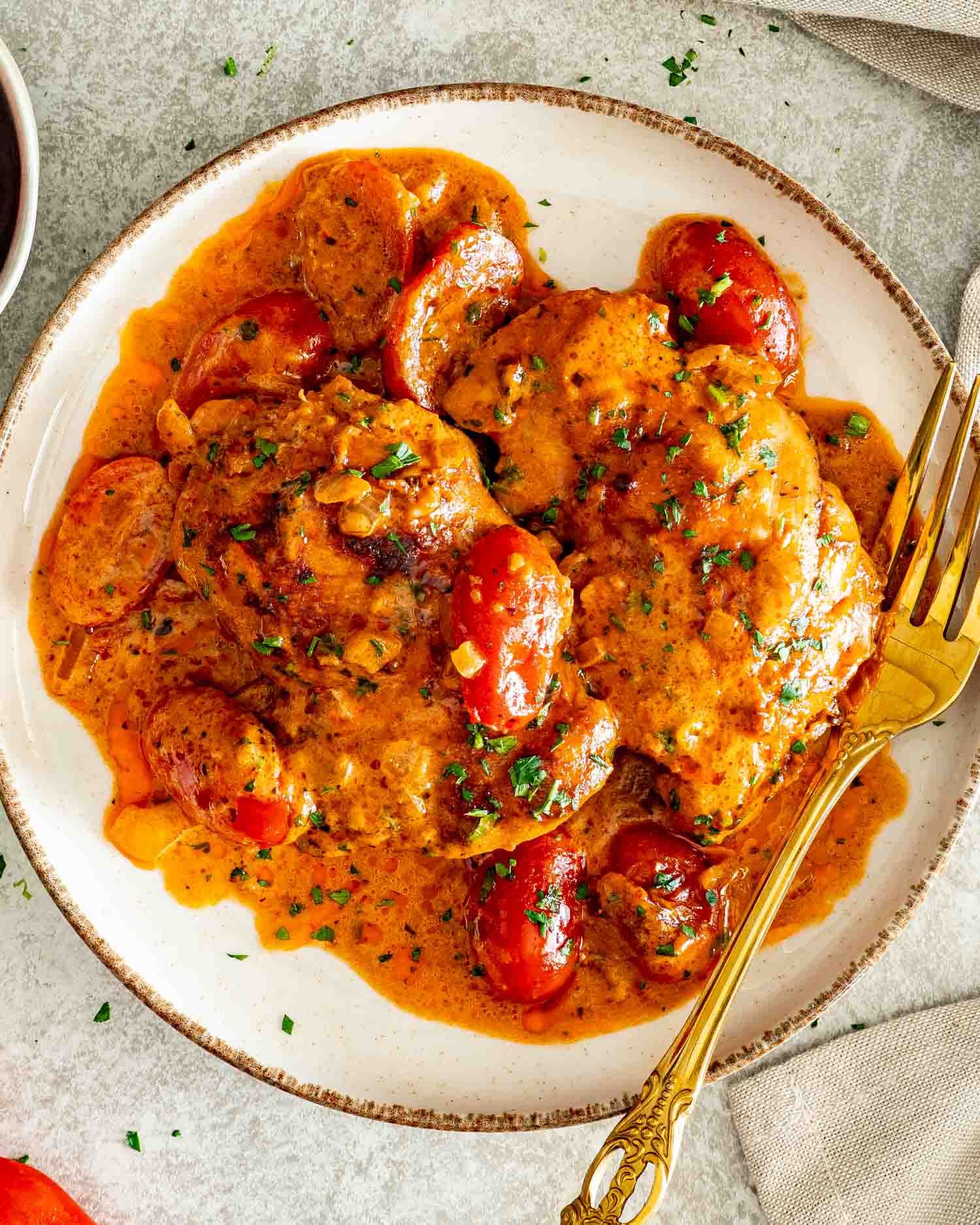
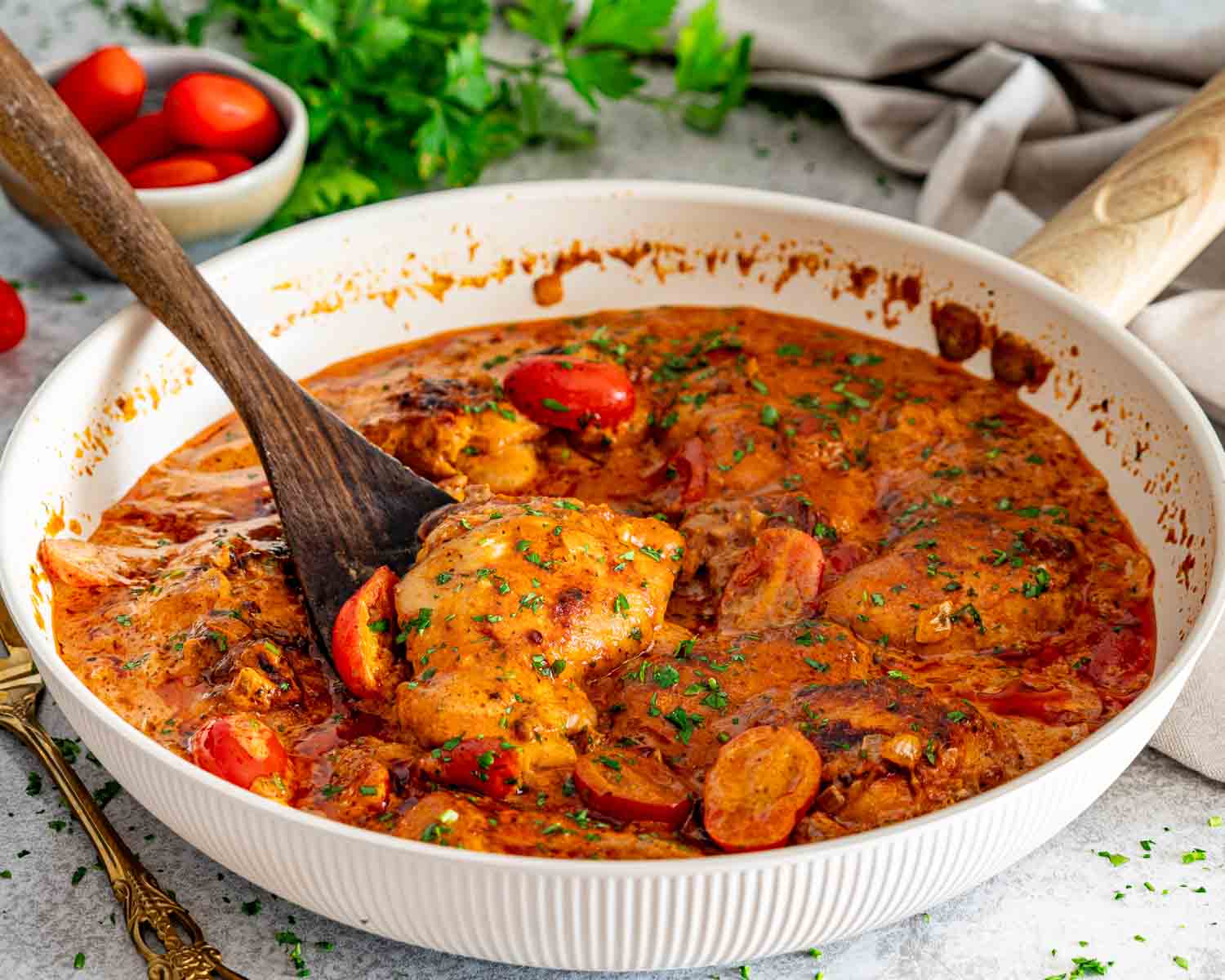
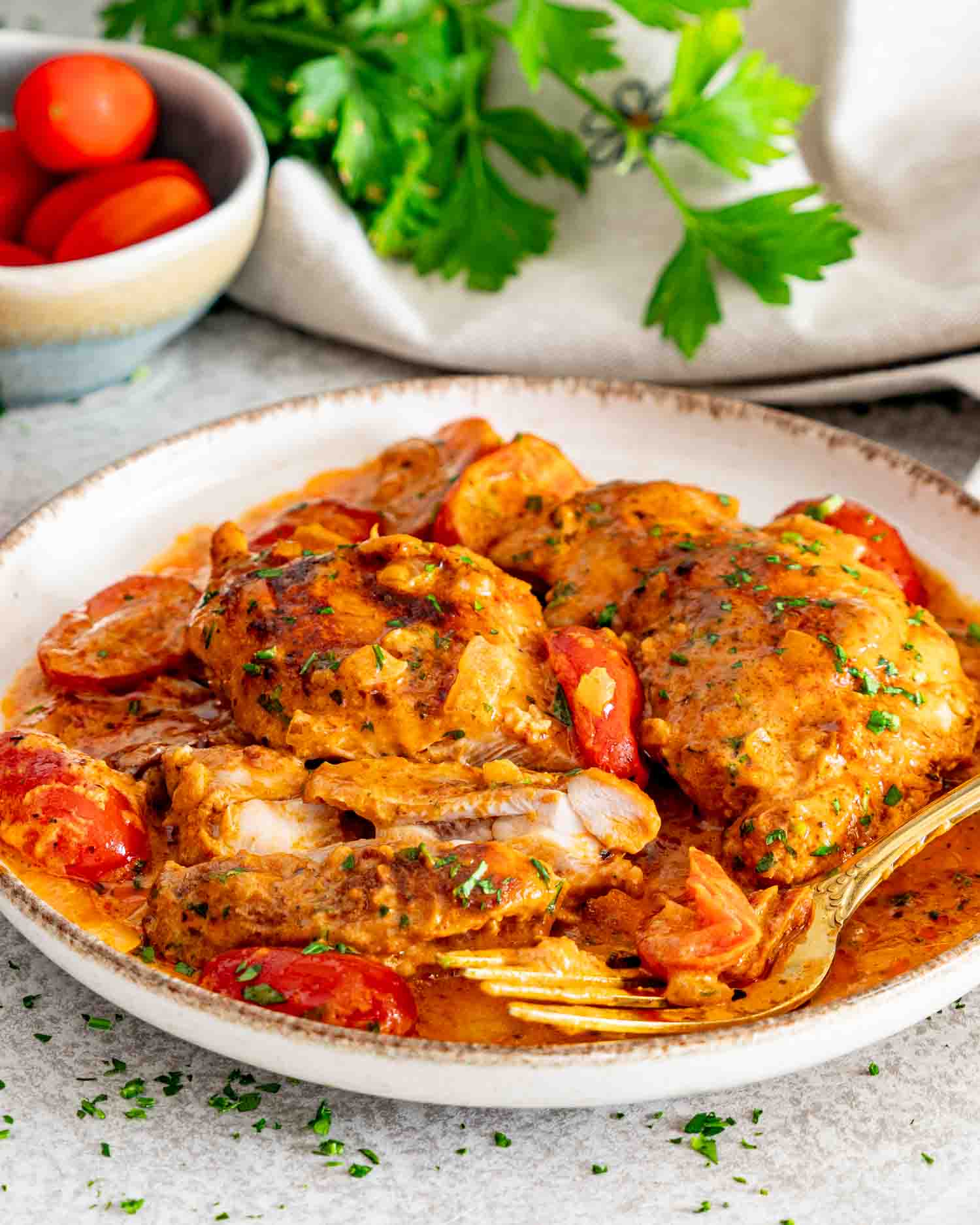
Serve: Straight from the skillet, hot, with plenty of sauce spooned over the top.
Tips
- Don’t crowd the pan when you sear. If your skillet is on the smaller side, do the thighs in 2 batches. Crowded chicken steams instead of browning and you lose the color you’re doing this for.
- Scrape the pan properly when the onion goes in. The onion releases water and that’s your window to lift everything stuck to the bottom.
- Grate your own Parmesan. It’s the difference between a silky sauce and a grainy one, and it takes 2 minutes.
- If the sauce is thinner than you want at the end, pull the chicken out and let it bubble on its own for another few minutes.
- If it’s thicker than you want, a splash of broth brings it right back.
Substitutions and Variations
- Chicken breasts work if that’s what you have, but cut the simmer to about 8 minutes and check them early. They don’t forgive a long sit in the sauce the way thighs do.
- Chicken broth in place of vegetable broth is a straight swap.
- This sauce would take a couple of handfuls of spinach wilted in at the end, or some sliced mushrooms cooked down with the onion.
Leftovers and Storage
Airtight container in the fridge for up to 3 days. This one reheats better than most cream sauces because there’s relatively little cream in it.
Warm it gently on the stove with a splash of broth, stirring as it comes back together.
I don’t recommend freezing. Cream sauces separate on thawing, and while this one holds up better than most, it’s not what I’d choose.
What to Serve With It
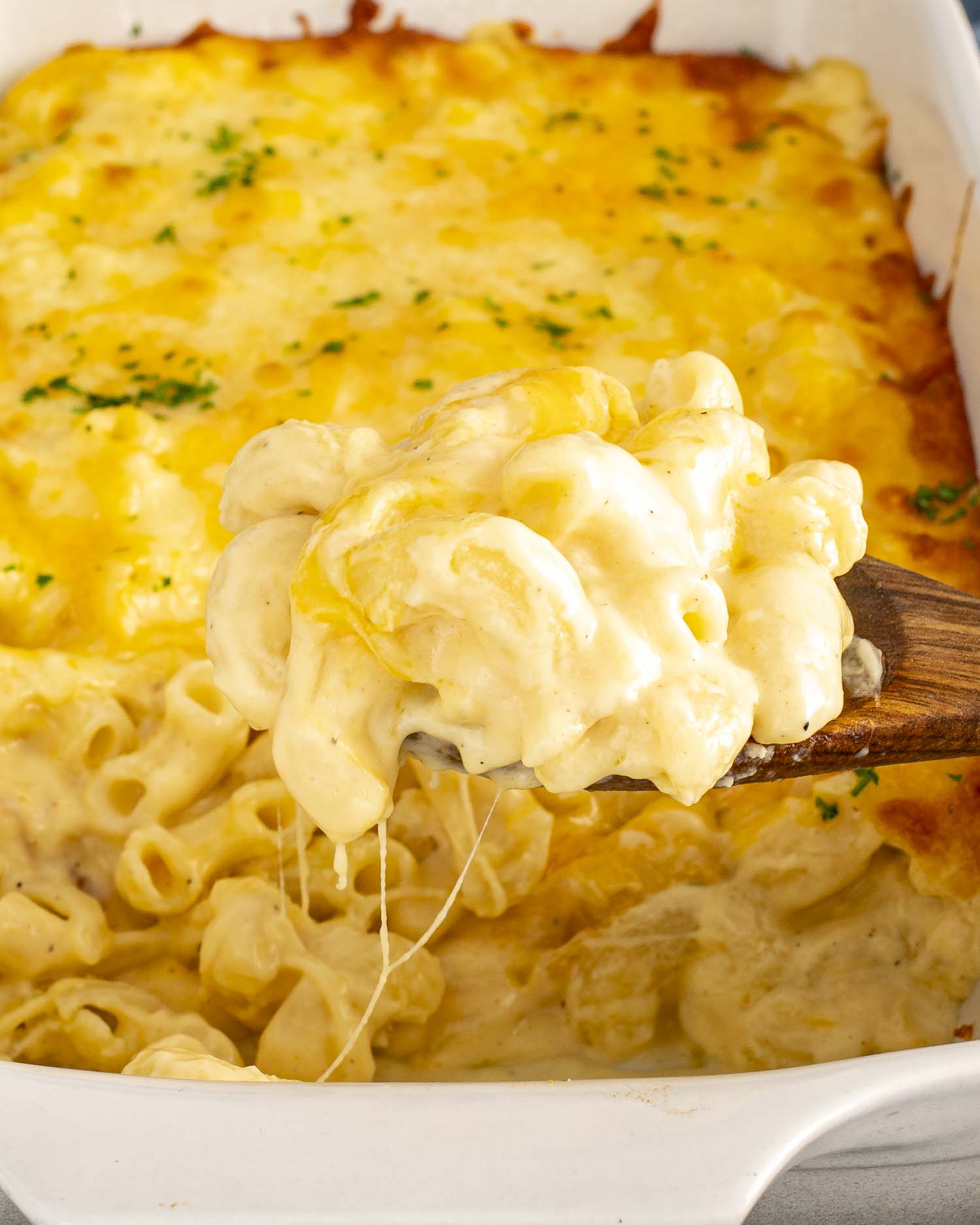
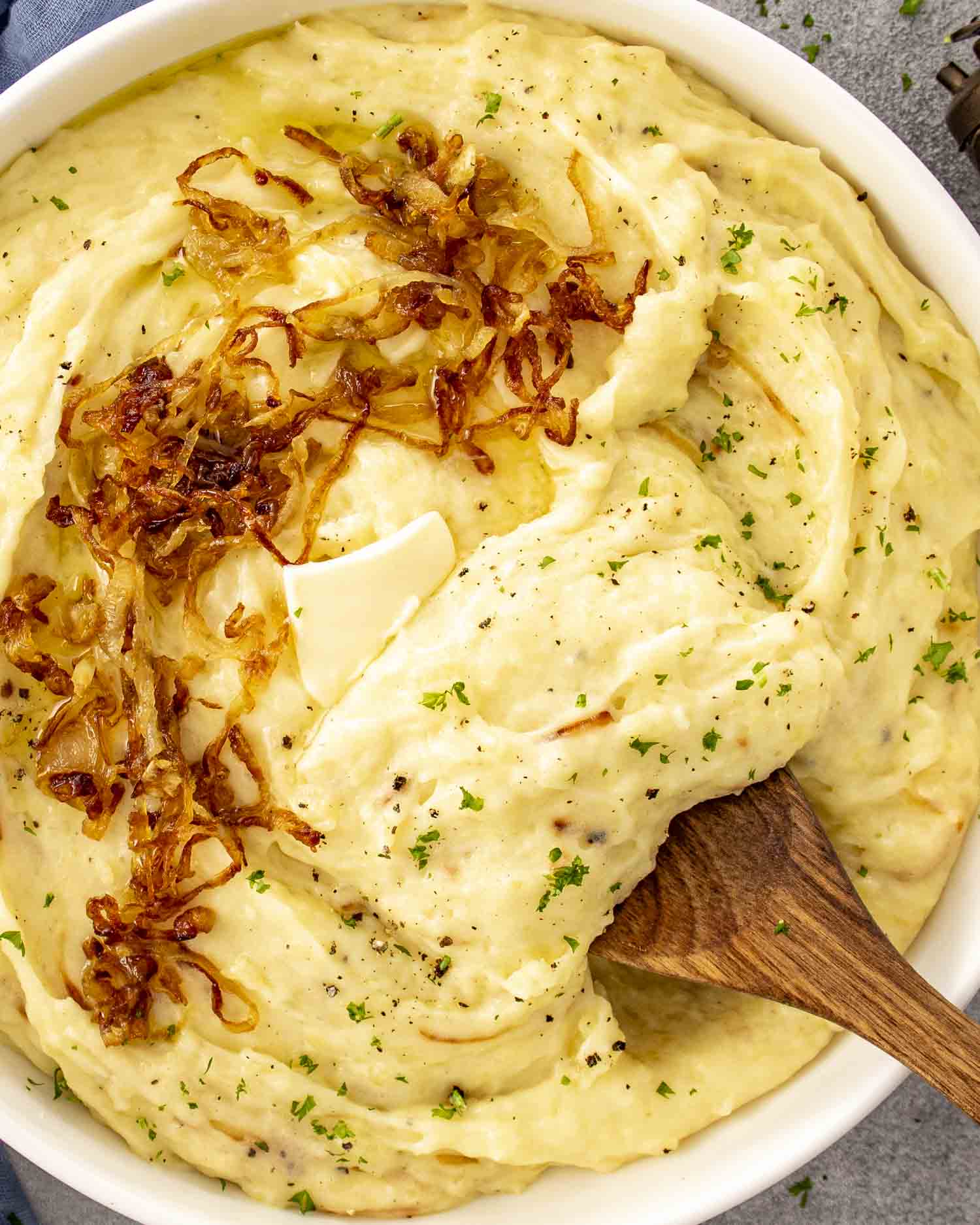
Something to get the sauce off the plate. Mashed potatoes, rice, or buttered noodles all work.
Crusty bread if you want the most direct route. On the side, roasted green beans or asparagus, or a simple green salad with a sharp vinaigrette to cut through the richness.
Try These Recipes Next
- Creamy Garlic Parmesan Chicken Pasta
- Creamy Garlic Parmesan Chicken
- Weeknight Chicken Noodle Stir Fry
- Sheet Pan Chicken Thighs and Vegetables
- Honey Lemon Garlic Chicken
Creamy Sundried Tomato Chicken Thighs
Ingredients
For the chicken marinade
- 2 pounds boneless skinless chicken thighs
- 2 tablespoons tomato paste
- 1 tablespoon olive oil
- 2 teaspoons garlic powder
- 2 teaspoons onion powder
- 2 teaspoons paprika
- 1 teaspoon dried basil
- 1 teaspoon salt
For the sauce
- 2 tablespoons olive oil
- 1 large yellow onion, finely chopped
- 3 cloves garlic, minced
- 1 tablespoon tomato paste
- ¼ cup sundried tomatoes, chopped, oil packed
- 1 cup vegetable broth
- ½ cup heavy cream
- 1 cup cherry tomatoes, halved
- ⅓ cup Parmesan cheese, grated
Instructions
- In a bowl, toss the 2 pounds chicken thighs with the 2 tablespoons tomato paste, 1 tablespoon olive oil, 2 teaspoons garlic powder, 2 teaspoons onion powder, 2 teaspoons paprika, 1 teaspoon dried basil, and 1 teaspoon salt until every piece is well coated. Let it marinate for at least 30 minutes, or up to overnight in the fridge.
- Heat the 2 tablespoons olive oil in a large skillet over medium high heat. Add the chicken thighs and sear for 4 to 5 minutes per side, until deeply golden. They do not need to be cooked all the way through yet, since they finish in the sauce. Transfer them to a plate.
- Lower the heat to medium and add the chopped yellow onion to the same skillet. Cook for 3 to 4 minutes, until softened, scraping up all the browned bits stuck to the pan. Those bits are pure flavor, so do not leave them behind.
- Stir in the 3 cloves minced garlic, 1 tablespoon tomato paste, and ¼ cup chopped sundried tomatoes. Cook for 1 minute, until fragrant and the paste darkens slightly.
- Pour in the 1 cup vegetable broth and stir to loosen everything into a sauce. Bring it to a gentle simmer, then stir in the ½ cup heavy cream and ⅓ cup grated Parmesan until smooth.
- Add the 1 cup halved cherry tomatoes, then nestle the chicken thighs back into the skillet along with any juices from the plate. Simmer for 12 to 15 minutes, until the chicken is cooked through and the sauce has thickened.
- Serve hot, spooning plenty of that sauce over the top.
Recipe Notes
- Marinating time. Thirty minutes minimum, overnight in the fridge if you can. The tomato paste marinade is what gives the chicken its color and its crust.
- Sear, don’t cook through. The thighs only need 4 to 5 minutes a side at this stage. They finish cooking in the sauce, which keeps them tender and puts all their juices back into the dish.
- Pour the plate juices back in. Whatever collects on the plate while the chicken rests goes back into the skillet with the thighs.
- Use oil packed sundried tomatoes. They’re softer and more intense than the dry kind. If you only have dry, soak them in hot water for 20 minutes first.
- Grate your own Parmesan. Pre-shredded cheese is coated with an anti caking agent that won’t melt cleanly, and it’s the usual reason a cream sauce turns grainy.
- Adjusting the sauce. Too thin, pull the chicken and simmer it a few minutes longer on its own. Too thick, loosen it with a splash of broth.
- Storage. Airtight container in the fridge for up to 3 days. Reheat gently with a splash of broth. Freezing isn’t recommended.
Nutrition Information
Frequently Asked Questions
You can, but shorten the simmer to around 8 minutes and start checking. Thighs are genuinely the better cut here.
Thirty minutes is the minimum and it’s worth it. The tomato paste needs time to grip the chicken, and that’s what gives you the color and the crust.
You’d need to soak them in hot water for about 20 minutes first. Oil packed are softer and more flavorful, so I’d go looking for those.
Almost always pre-shredded Parmesan, or a sauce that was boiling too hard when the cheese went in. Low heat and a block of real Parmesan solve both.
It’s best fresh, but it holds well for a day and reheats nicely with a splash of broth.




Leave a Reply