

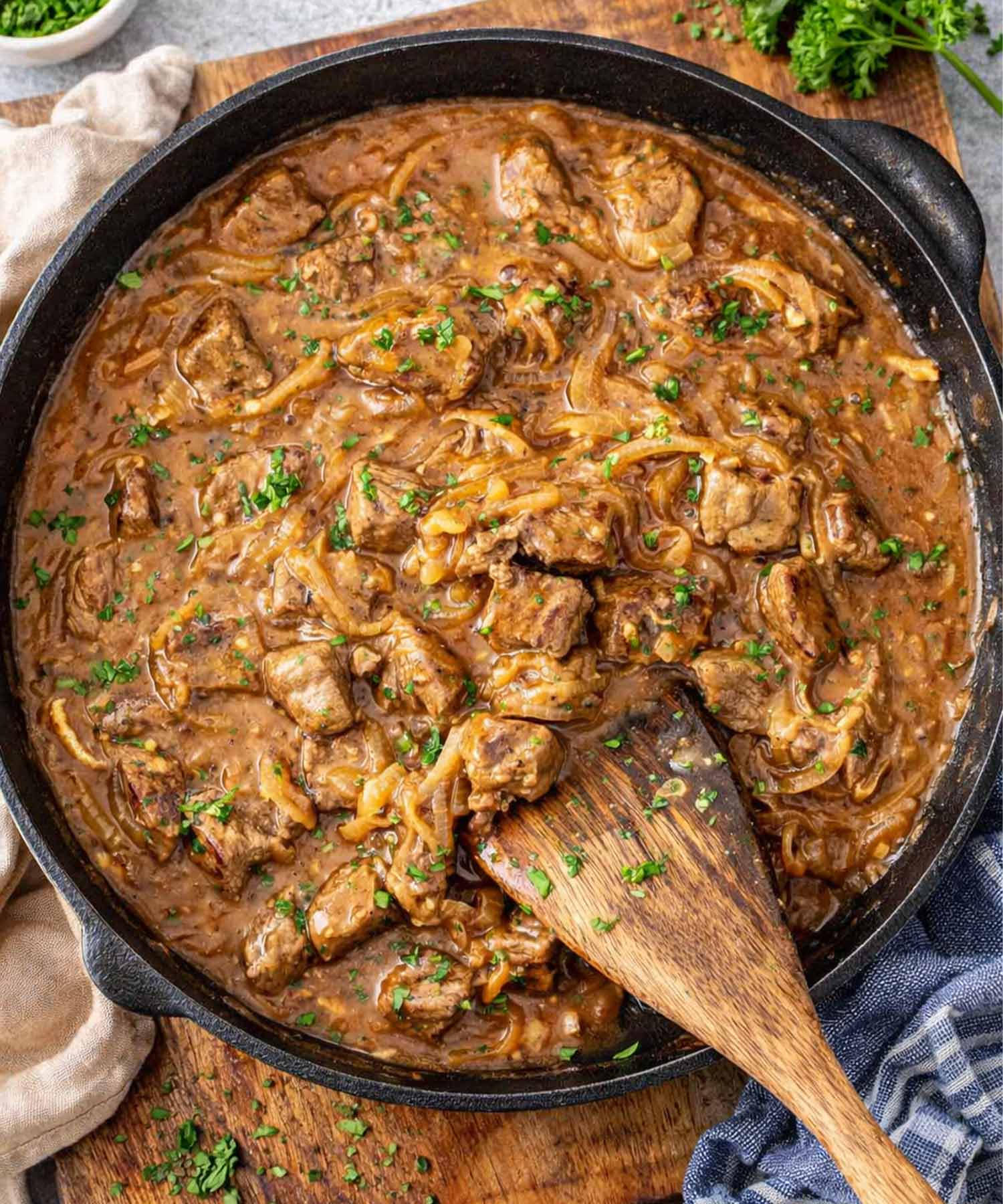
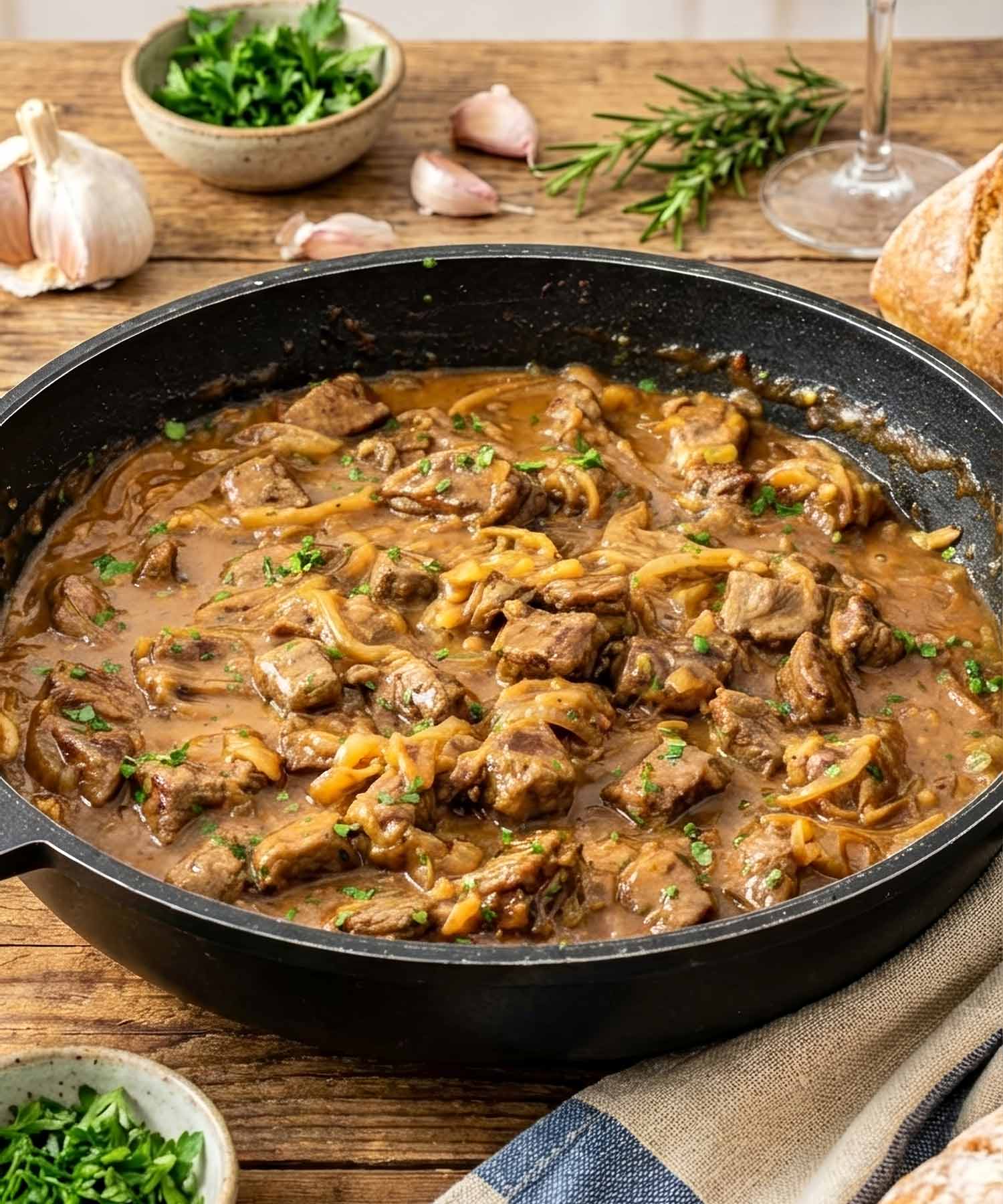
Beef and Onion Skillet is how you get tender, flavorful beef without hours of cooking or ending up with something chewy. One pan, a pile of caramelized onions, and a rich gravy that comes together fast.

Easy Beef and Onion Skillet
Beef and Onion Skillet gives you that rich, slow cooked flavor without committing to hours at the stove. Tender beef, a proper gravy, and onions that actually get the time they need to build real flavor.
Nothing complicated here, just a few simple steps done properly. Cook the onions until soft and lightly golden, keep the beef from overcooking, and the whole thing comes together fast but tastes like it didn’t.
Key Ingredients & Tips
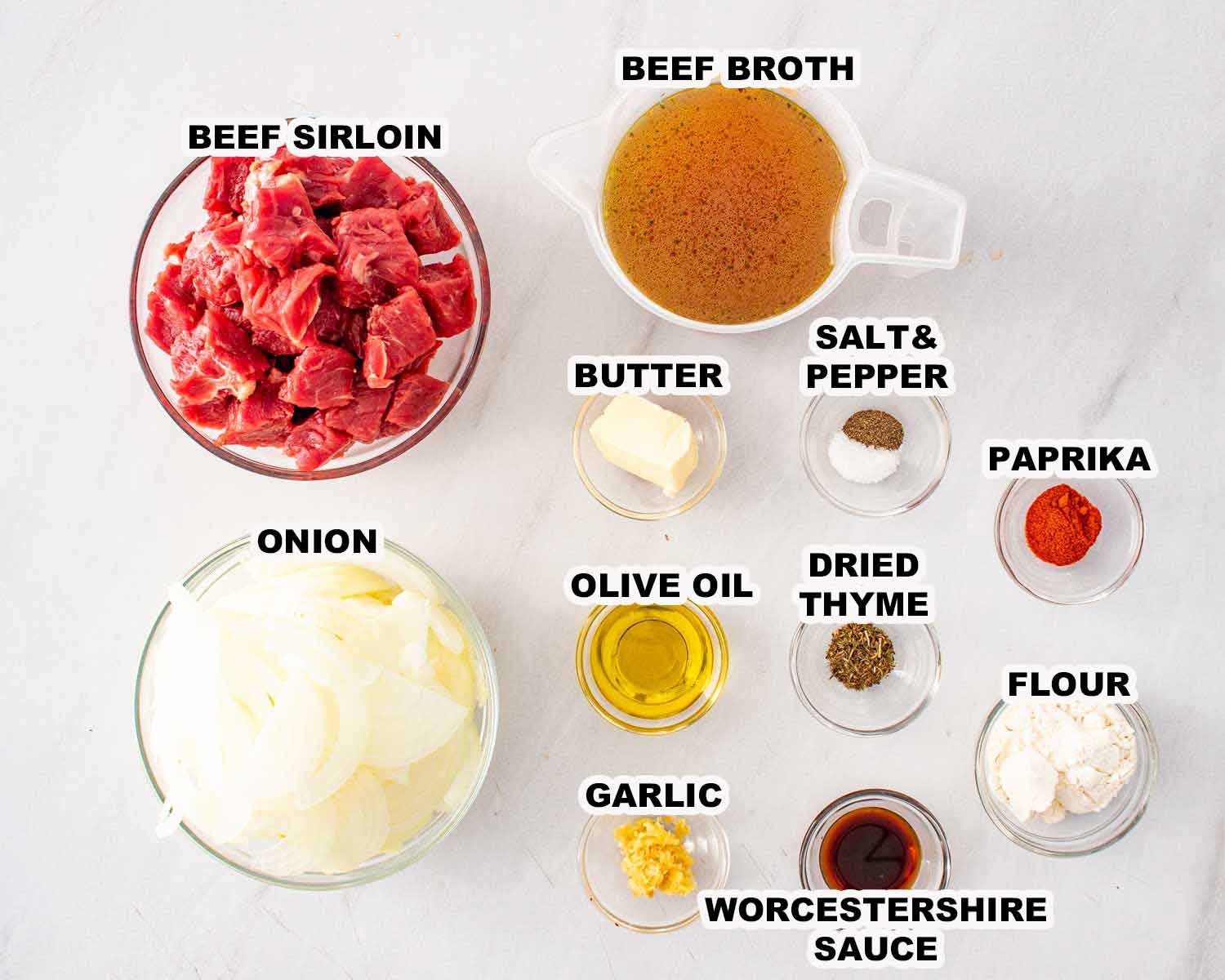
- Onion: Yellow onions are your best bet here. They cook down softer and bring a natural sweetness that balances the beef. Red onions work if that’s what you have, just know they’ll stay a bit sharper and less mellow.
- Beef: Sirloin gives you tender pieces that cook quickly, but stew meat works if you let it simmer a little longer. You can also swap in thin sliced steak or even ground turkey if you want something lighter.
- Garlic: Fresh is always better here. It only cooks for a few seconds, but it adds a lot of depth.
- Flour: This is what thickens the gravy. Let it cook for about a minute so you don’t end up with that raw flour taste.
- Beef broth: Try to use a good one if you can. Since the sauce is simple, the broth really carries a lot of the flavor.
- Worcestershire sauce: This is where that deeper savory flavor comes from. It’s subtle, but you’d notice if it wasn’t there.
- The “secret splash”: When you deglaze the pan, a small splash of Worcestershire or even balsamic vinegar adds a bit of tang and brings everything together. Not required, but it makes a difference.
- Butter: Stirred in at the end for a smoother, richer sauce. It’s a small step but worth it.
Why Is My Beef Chewy
- Cut too thick: Big chunks take longer to break down, and by the time they do, they’ve usually dried out. Keep pieces bite size so they cook quickly and evenly.
- Wrong cut: Lean cuts like sirloin cook fast but can turn tough if pushed too far. Tougher cuts like stew meat need a bit more simmer time to relax and tenderize.
- Overcooking: This is the big one. Beef goes from tender to chewy fast. Once it’s cooked through, let it finish gently in the sauce, not on high heat.
- Crowding the pan: If the beef is packed in, it steams instead of sears. No browning means less flavor and tougher texture. Give it space and do batches if needed.
How To Get Tender Beef Every Time
- Slice against the grain: Look at the lines running through the meat and cut across them, not with them. This shortens the fibers so the beef stays tender instead of chewy.
- Keep the pieces small: Bite size pieces cook faster and more evenly. Big chunks sound nice in theory, but they’re usually the reason things get tough.
- Sear, don’t steam: Give the beef space in the pan so it actually browns. That crust isn’t just for flavor, it helps the texture too.
- Don’t overcook it: Once the beef is browned, it doesn’t need aggressive heat anymore. Let it finish gently in the sauce so it stays juicy.
- Let the sauce do the work: That simmer at the end is where everything comes together. The beef relaxes, the flavors build, and suddenly it tastes like you planned this all along.
How To Get A Proper Sear (And Not Gray Beef)
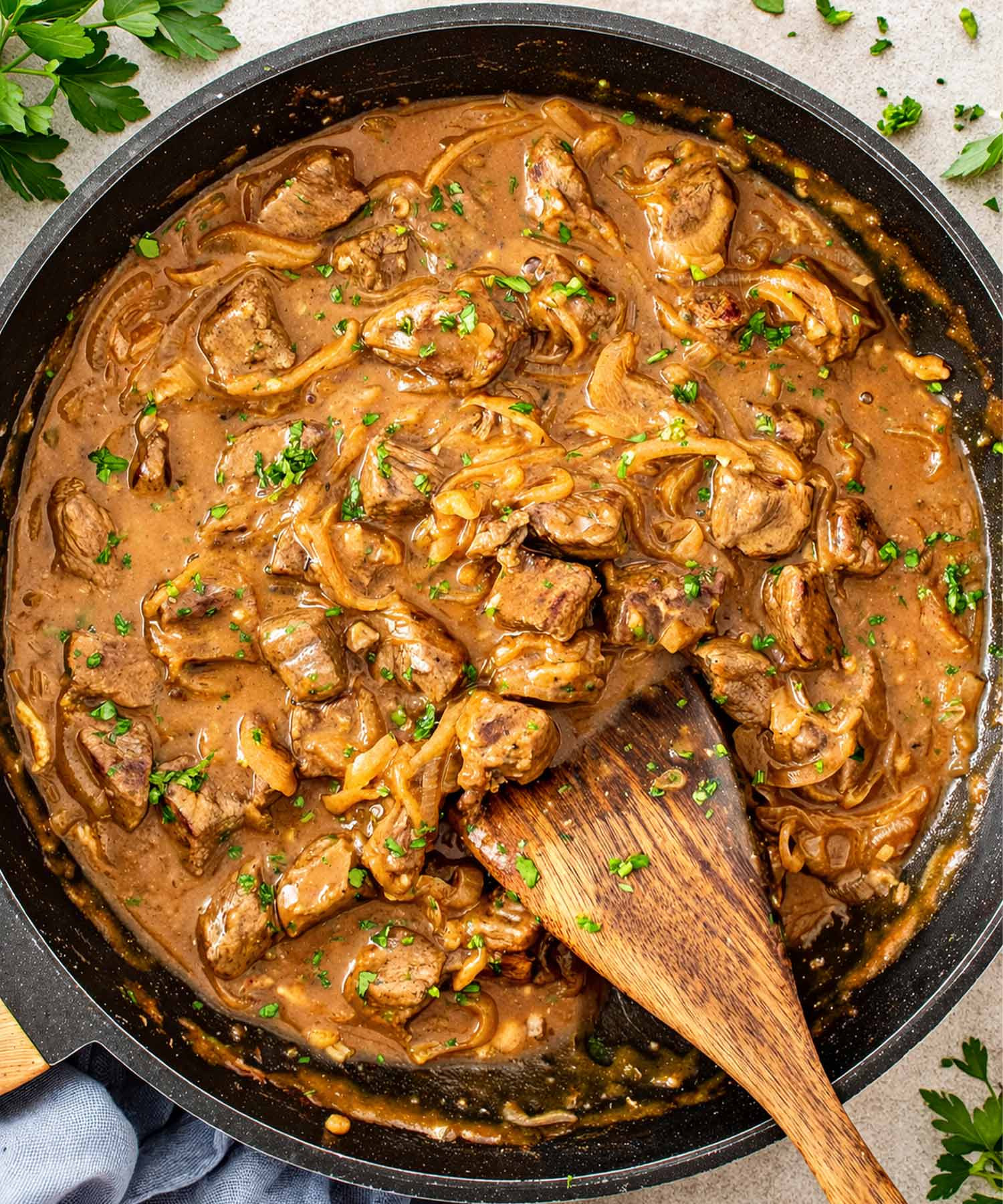
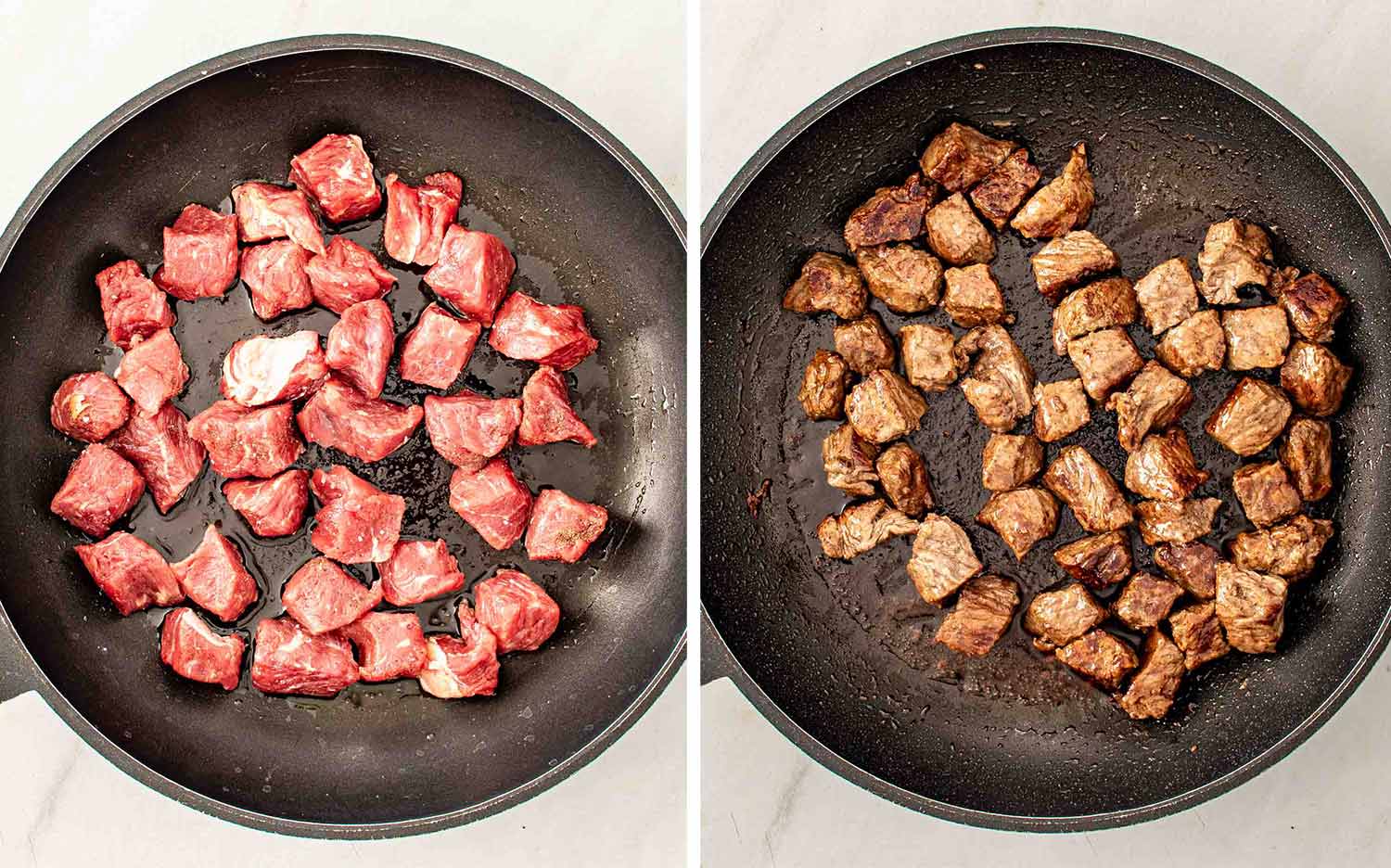
If your beef comes out gray and a bit sad looking, it’s not the recipe. It’s the pan. The skillet needs to be hot before the beef goes in, and you need to give it space. If you crowd the pan, the meat releases moisture and starts steaming instead of browning. That’s how you end up with that pale, boiled look.
Work in batches if you need to. Let the beef sit for a minute so it can actually develop some color before you start moving it around. Once the beef is browned and out of the pan, that’s when the onions go in. All those browned bits stuck to the bottom are pure flavor. The onions pick that up as they cook, which is exactly what builds the base of the sauce.
How To Turn This Into A Full Meal
This is the kind of skillet that can go a lot of different ways depending on what you’ve got in the fridge and how hungry people are.
- Low carb: Spoon it over cauliflower rice or sautéed cabbage. The sauce does all the work, so you’re not missing anything.
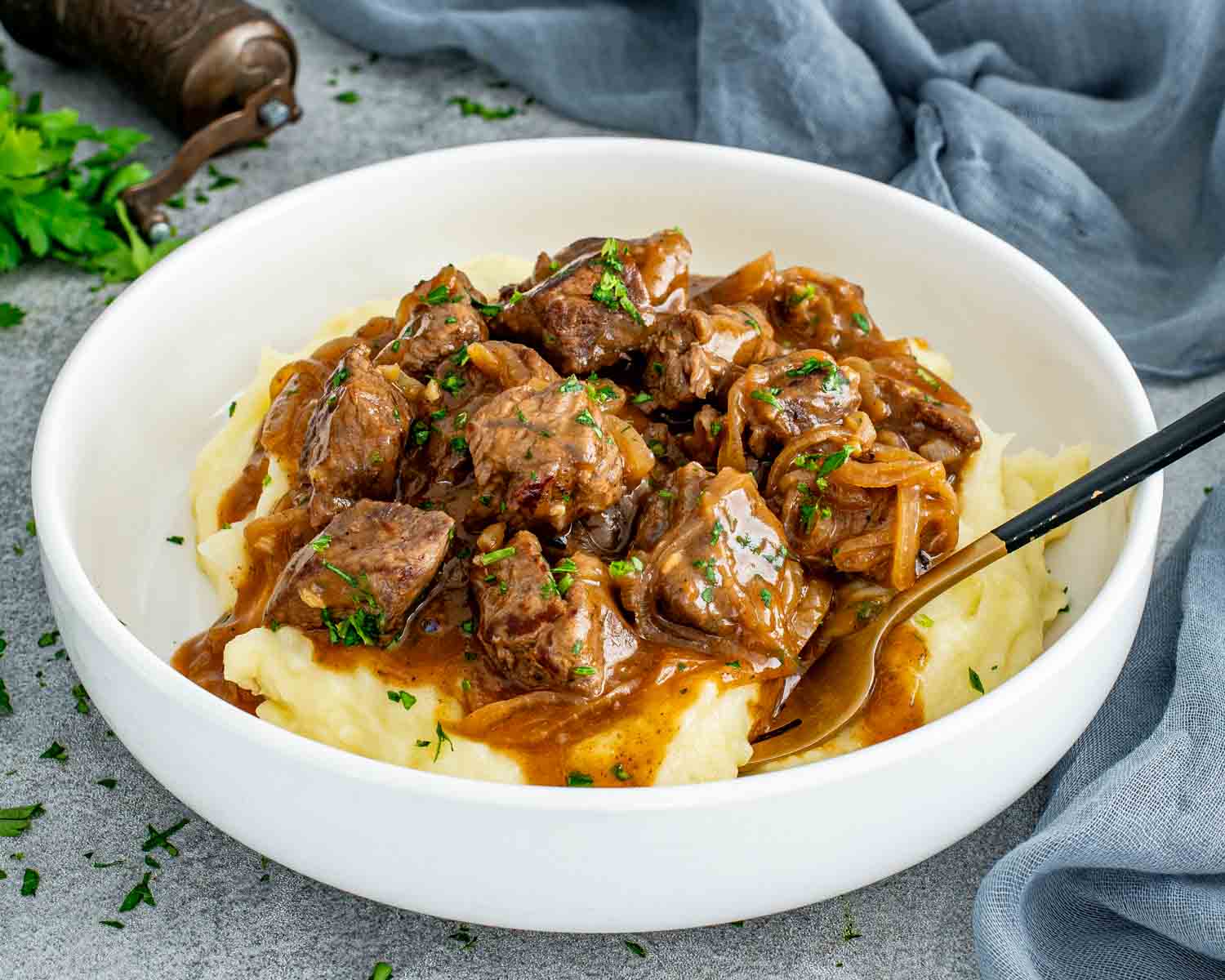
- Hearty: Serve it over mashed potatoes or buttered egg noodles. You can also toss in some pre cooked potatoes right into the skillet and let them soak up the gravy.
- Bowl style: Pile it into a bowl, top it with a fried egg and some sliced avocado. Sounds a little extra, but it works.
- Stretch it: Add mushrooms or even a handful of frozen peas near the end if you want to bulk it up a bit.
- Bread situation: Don’t skip this. Something crusty on the side to drag through that sauce is never a bad idea.
Storage & Meal Prep
This is one of those dishes that actually tastes better the next day. The onions settle in, the sauce thickens up a bit, and everything just comes together.
- Fridge: Store in an airtight container for up to 3 to 4 days.
- Reheat: Skip the microwave if you can. Warm it in a skillet over medium low heat with a splash of water or beef broth. That loosens the sauce and keeps the beef from tightening up.
- Freezer: You can freeze it for up to 2 months. Thaw overnight in the fridge before reheating.
- Meal prep tip: This holds up really well, so it’s great for making ahead and portioning out for the week. Just keep your base separate if you can, like rice or noodles, so nothing gets soggy.
Frequently Asked Questions
Once the beef is out of the pan, lower the heat to medium. If the pan feels too hot, add a small splash of water or broth before the onions go in. That cools things down and helps them soften instead of catching and burning.
Usually it’s either overcooking or the cut of beef. Lean cuts like sirloin cook quickly and can turn chewy if left too long. Keep the simmer gentle and don’t push the cooking time. If you’re using stew meat, give it a bit more time so it can actually tenderize.
Try These Recipes Next
- Old-Fashioned Beef Tips and Noodles
- Slow Cooker Beef Barley Soup
- One-Pot Swedish Meatball Stroganoff
- Mongolian Beef Noodles
Easy Beef and Onion Skillet (One-Pan Dinner)
Ingredients
- 1½ pounds beef sirloin , or beef stew meat, sliced into bite-size pieces
- 1 teaspoon salt
- ½ teaspoon black pepper
- 2 tablespoons olive oil
- 2 large onions, thinly sliced
- 3 cloves garlic, minced
- 2 tablespoons all-purpose flour
- 2 cups beef broth
- 1 tablespoon Worcestershire sauce
- 1 teaspoon paprika
- ½ teaspoon dried thyme
- 1 tablespoon butter
Instructions
- Season the beef with 1 teaspoon of salt and ½ teaspoon of black pepper. Heat 2 tablespoons of olive oil in a large skillet over medium-high heat. Add the beef in batches and sear for 4 to 5 minutes, until nicely browned. Remove to a plate. Do not crowd the pan.
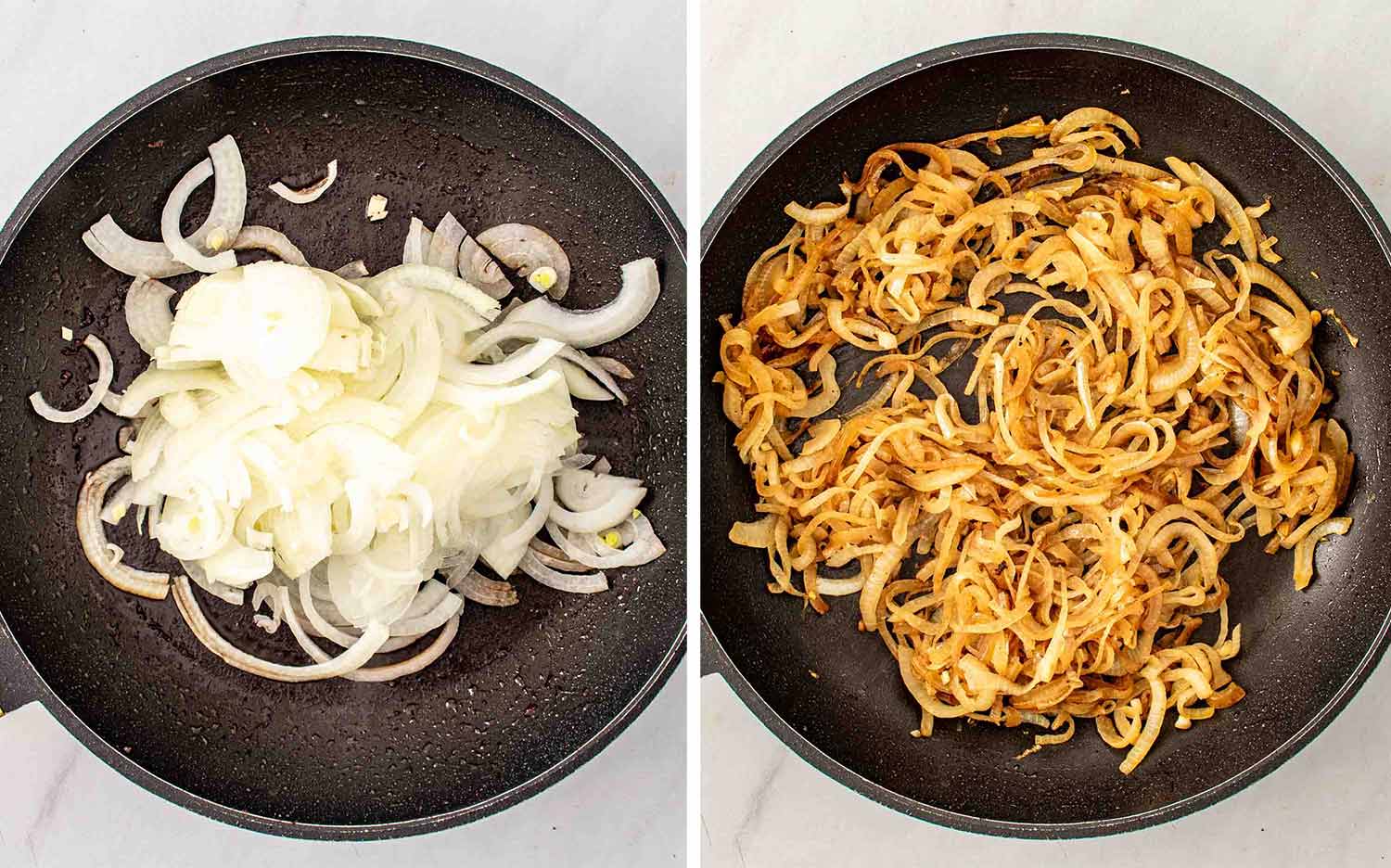
- Reduce heat to medium. Add the sliced onions to the same skillet and sauté until they turn from translucent to a rich golden brown, about 12 minutes. If they start to look dry, add a tablespoon of butter or water. This creates the “jammy” texture that makes this skillet taste like it came from a French bistro rather than a weeknight kitchen.
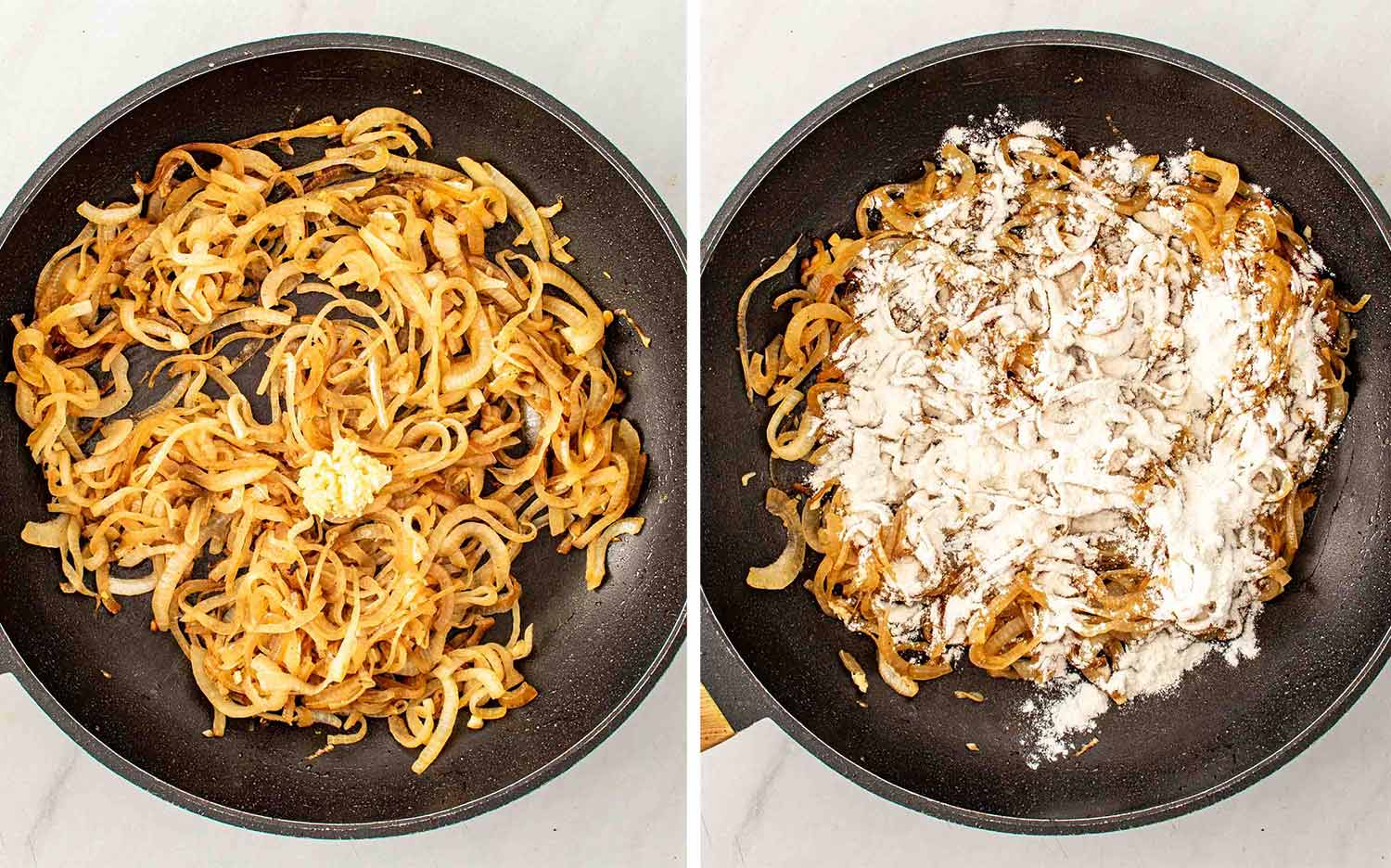
- Stir in 3 cloves of garlic and cook for 30 seconds. Sprinkle in 2 tablespoons of flour and stir well, cooking for 1 minute to remove the raw flour taste.
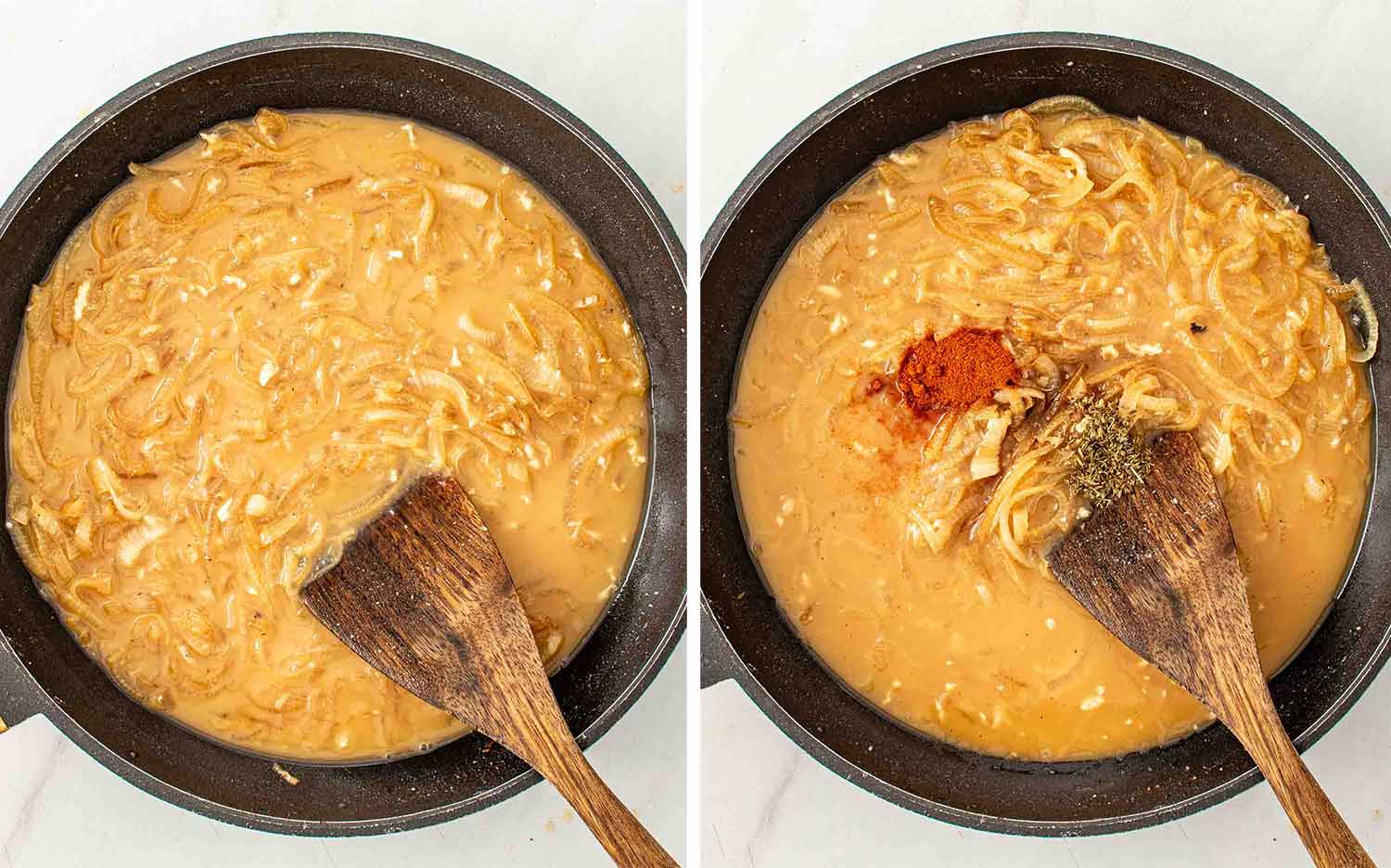
- Slowly pour in 2 cups of beef broth, stirring constantly to avoid lumps. Add 1 tablespoon of Worcestershire sauce, 1 teaspoon of paprika, and ½ teaspoon of thyme. Bring to a gentle simmer.
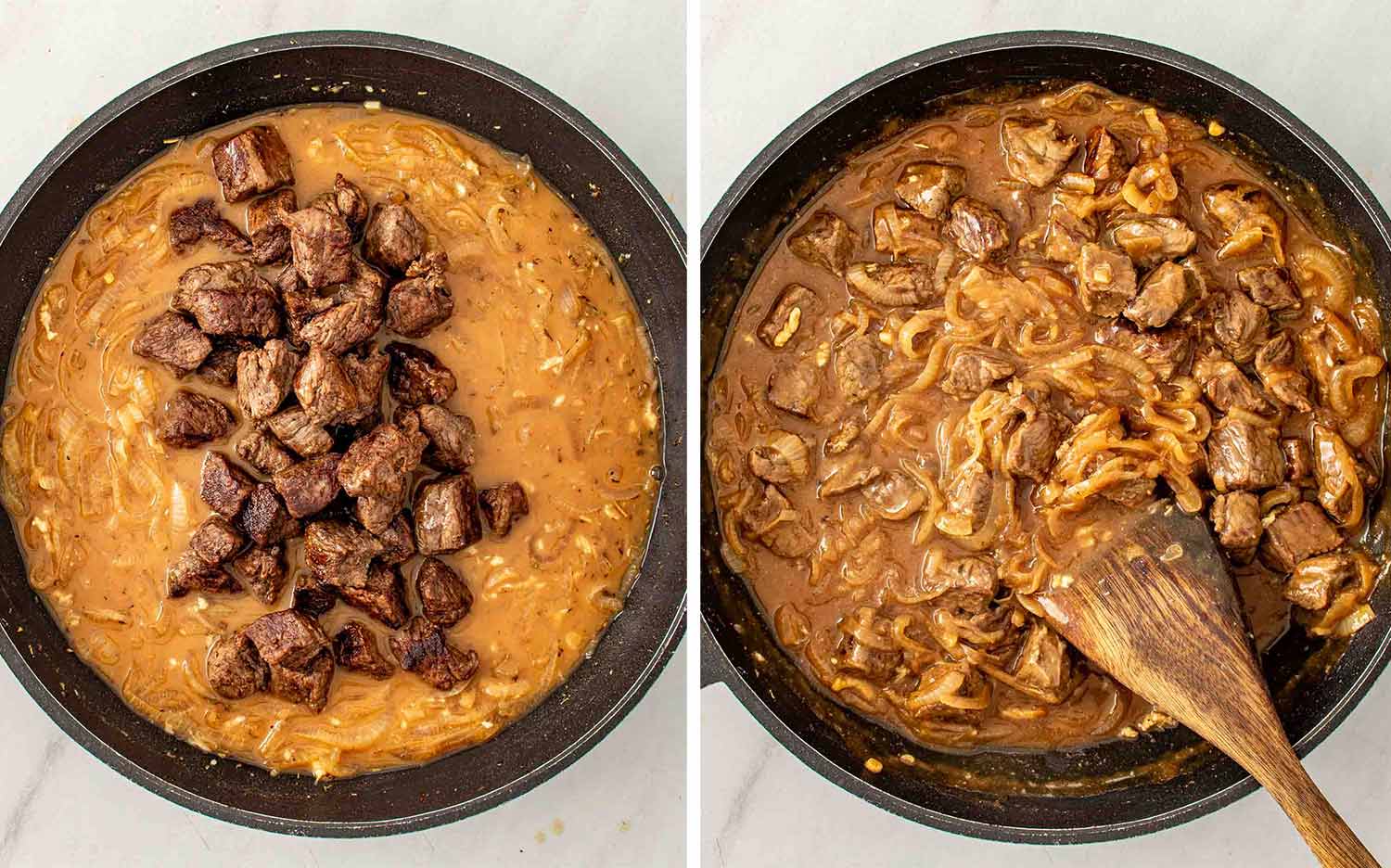
- Return the beef and any juices to the skillet. Reduce heat to low and simmer for 10 to 12 minutes, until the beef is tender and the gravy has thickened. Stir in 1 tablespoon of butter for a silky finish.
- Taste and adjust seasoning if needed. Serve hot over mashed potatoes, egg noodles or rice.
Recipe Notes
- Slice the beef into even, bite size pieces so it cooks quickly and stays tender.
- Don’t overcrowd the pan when searing. Brown in batches if needed for better flavor and texture.
- Let the onions cook long enough to soften and pick up color. This is where most of the flavor comes from.
- If using stew meat, add an extra 10 to 15 minutes of gentle simmering to help it tenderize.
- Add a splash of broth when reheating to loosen the sauce and keep the beef from tightening up.
- A small splash of Worcestershire or balsamic when deglazing adds extra depth if you want to boost flavor.





Leave a Reply